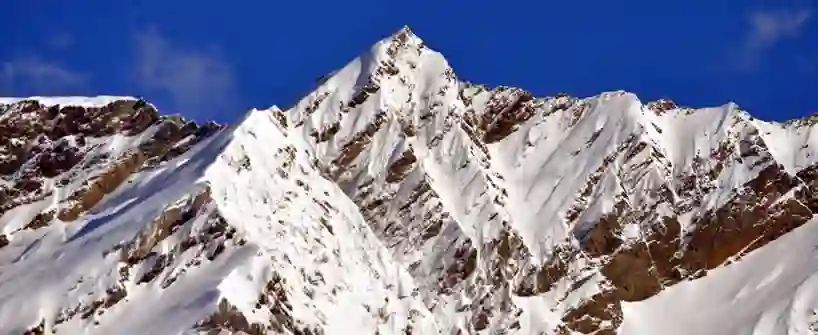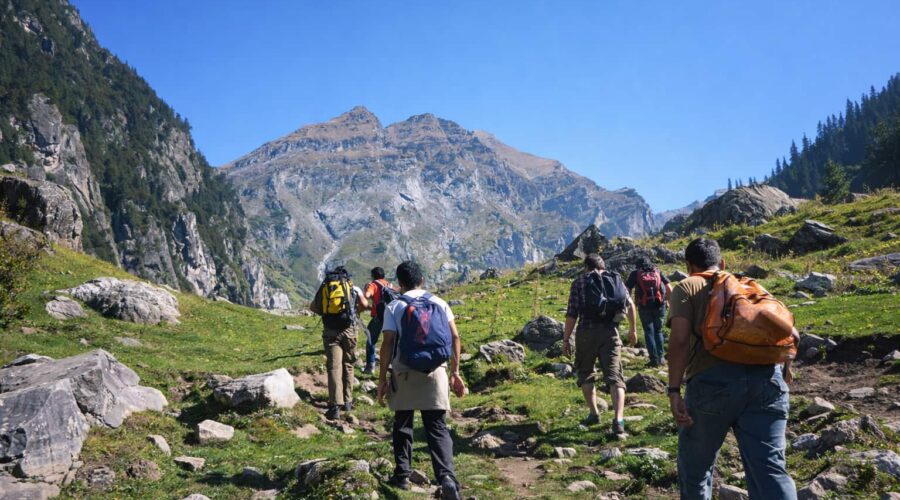
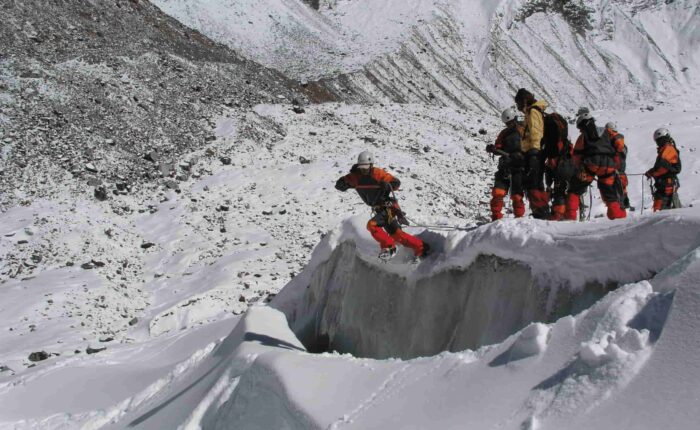


Our Private Basic Mountaineering Course in Manali is designed for beginners who want a strong and safe introduction to climbing in the Indian Himalayas. This hands on training focuses on essential mountaineering skills such as ropework, glacier travel basics, use of ice axe and crampons, navigation, safety systems, and high-altitude movement. With personalised guidance, small group attention, and real Himalayan terrain, participants learn the foundations needed for future treks, climbs, and expeditions. Whether you aim to climb higher peaks, improve technical skills, or simply understand the basics of mountain travel, this immersive course in Manali offers a solid starting point for your mountaineering journey.
Bhuntar Airport
Chandigarh Railway Station
Manali Bus Stand
Into Wild Himalaya Camp, Kalath
Driving Distance: 15 km
Hiking Distance: 1 km
Max Altitude: 2,050 m
Altitude Gain/Loss: +150 m
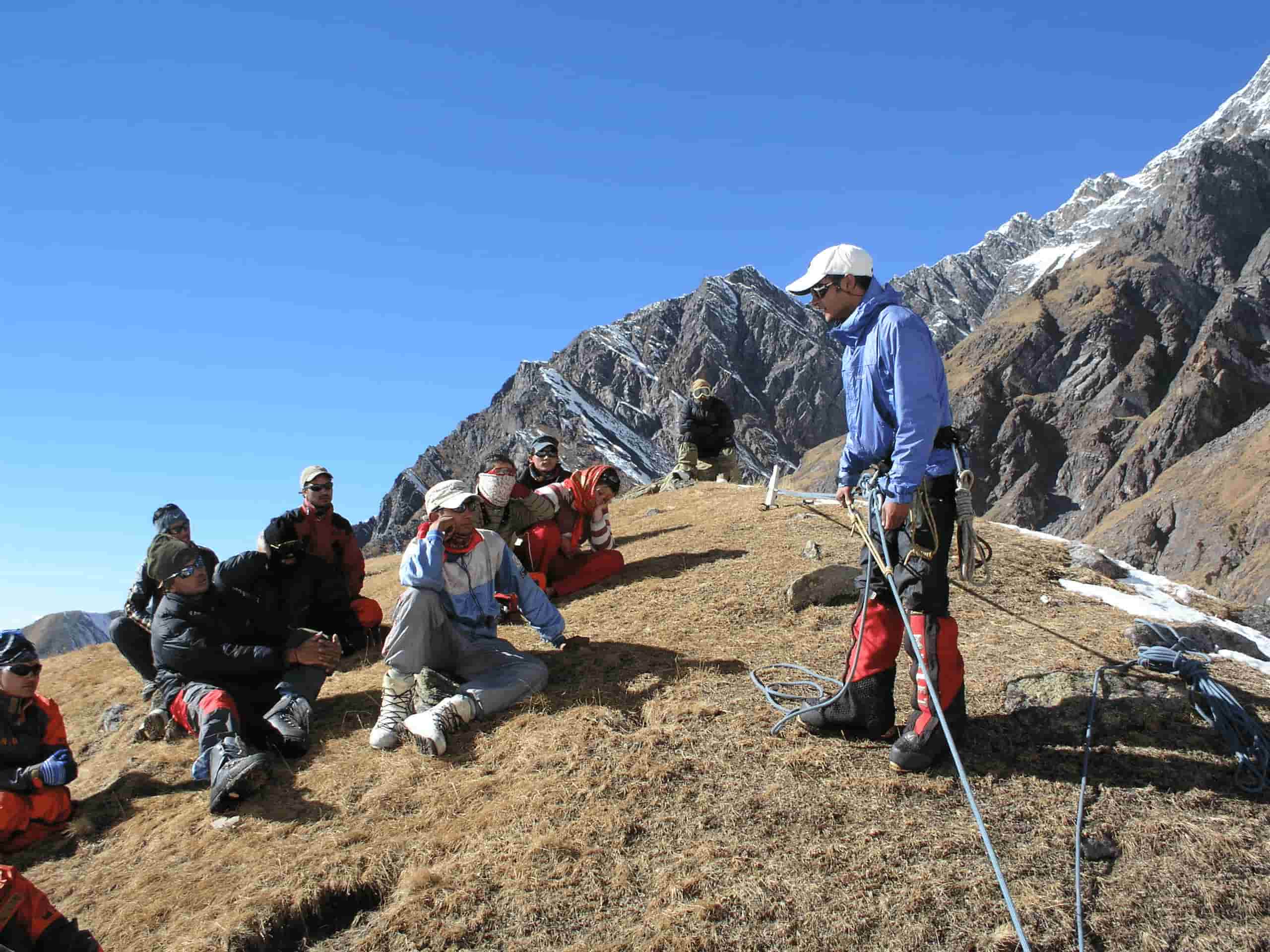
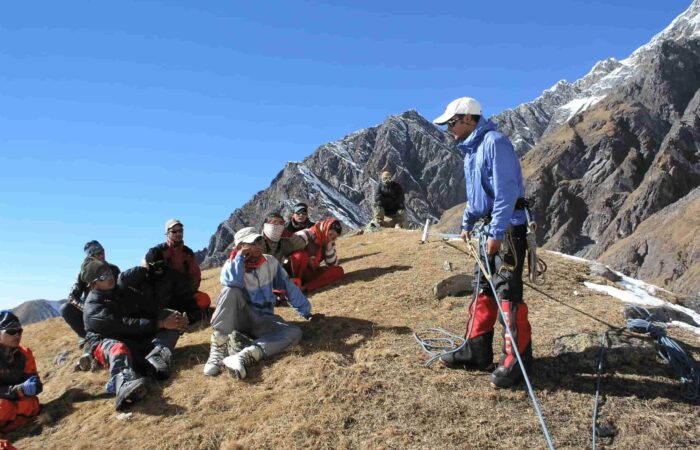
Participants arrive in Manali and assemble at the Into Wild Himalaya Camp at Kalath for registration and introductions. After a short briefing, the team drives to Sethan, where the temporary training camp with A-shape tents, kitchen tent, and dining tent is set up. After settling in, instructors conduct an orientation session covering course structure, safety expectations, equipment handling basics, and camp discipline. A short acclimatization walk follows before dinner. The day ends with a relaxed knot-practice introduction, helping participants get comfortable with ropes from day one.
.
Hiking Distance: 3 km
Max Altitude: 2,300 m
Altitude Gain/Loss: +250 m
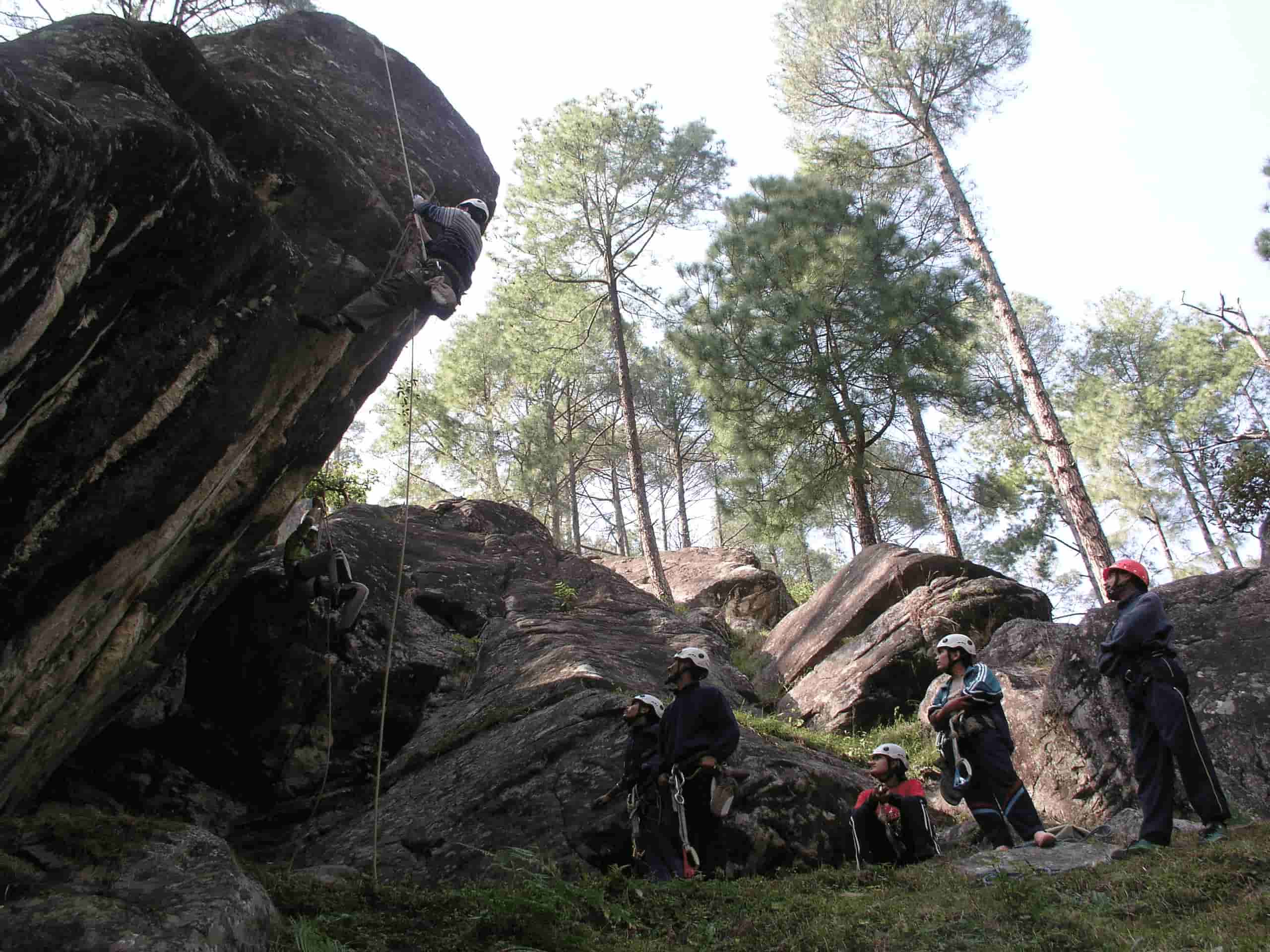
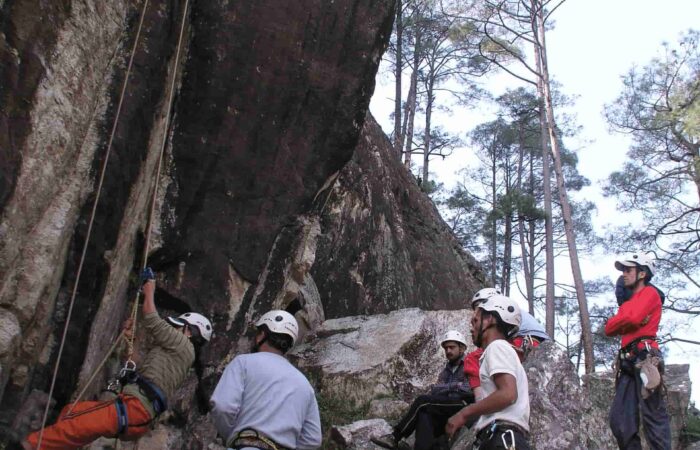
The day begins with a morning run and group exercises focused on improving endurance, flexibility, and mountain-specific conditioning. After breakfast, the pre-lunch session introduces basic bouldering movement, hand placements, body positioning, and safety spotting techniques. Participants practice short routes on Sethan’s granite boulders, guided closely by instructors. After lunch, lighter activities include knot practice, rope coiling, and an introductory lecture on mountaineering equipment, its functions, and care. The evening knot session helps reinforce basic knots, preparing the team for upcoming technical days.
Hiking Distance: 3 km
Max Altitude: 2,300 m
Altitude Gain/Loss: +200 m / –200 m
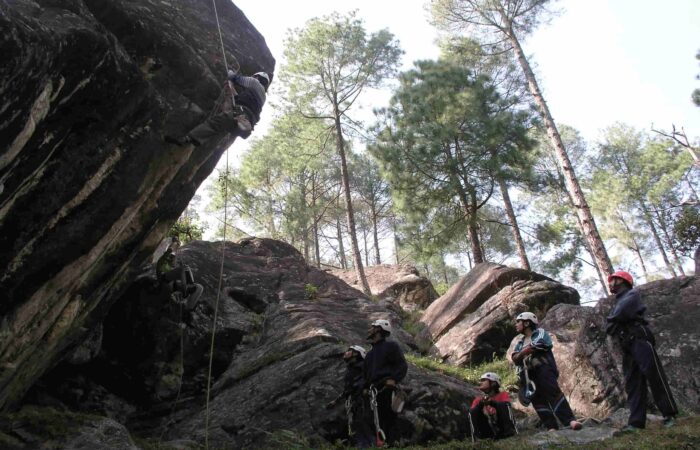
A refreshing morning run and strength training session help build stamina for technical climbing. After breakfast, the pre-lunch module focuses on basic rock climbing techniques, including footwork precision, weight transfer, grip variations, and balance. Trainees climb small natural rock faces to understand movement flow. Post-lunch activities include knot revision and a detailed lecture on climbing safety, belay systems, and communication commands. The evening knot-practice reinforces belay knots, figure-eight, and stopper knots, ensuring that every participant becomes comfortable with essential rope handling.
Hiking Distance: 3 km
Max Altitude: 2,300 m
Altitude Gain/Loss: +200 m / –200 m
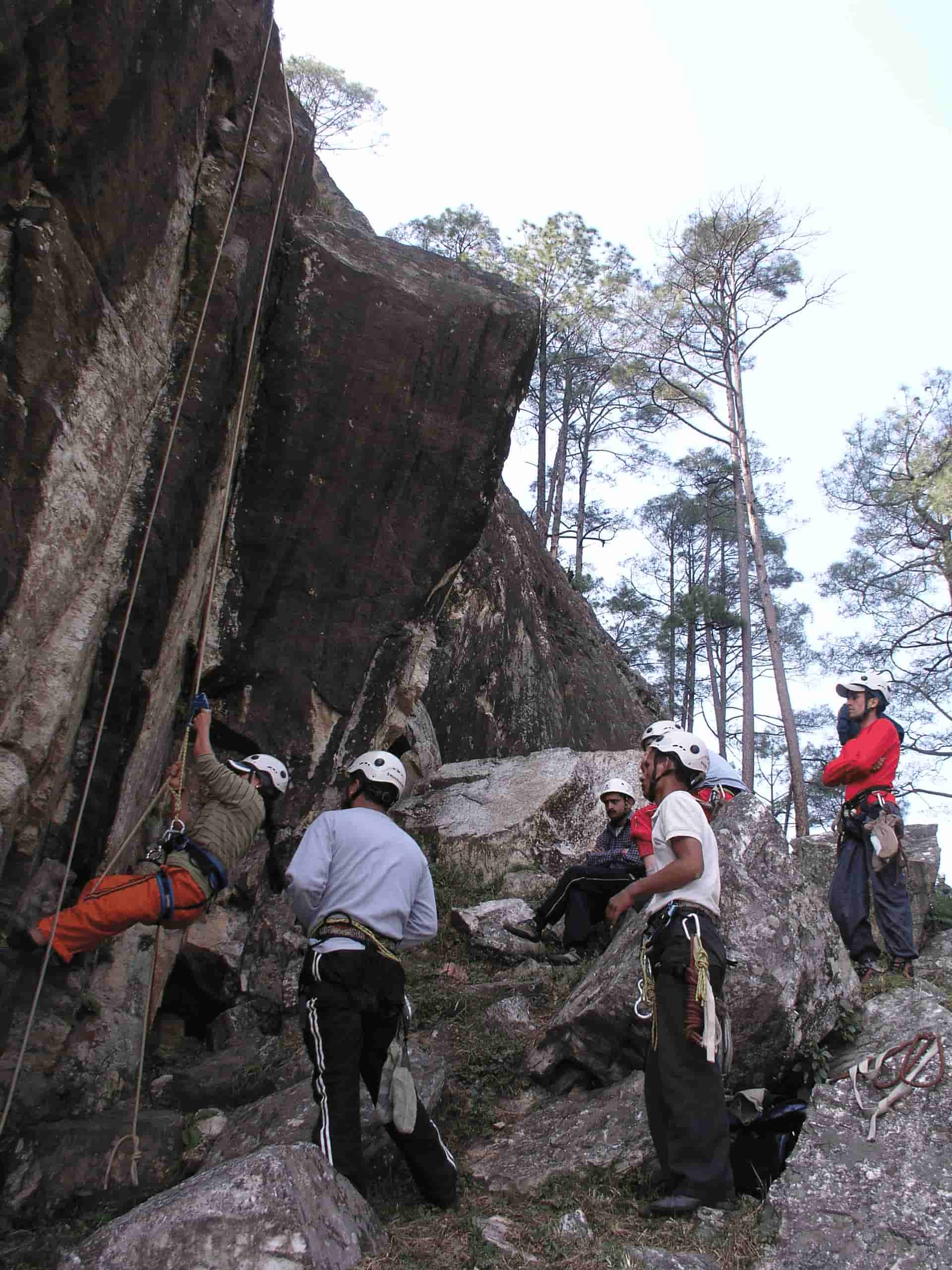
The morning begins with running and cardio focused exercises to strengthen leg muscles for steep descents. After breakfast, trainees engage in pre lunch rappelling training on progressively higher rock faces, learning proper body positioning, brake hand management, and controlled descent techniques. Afternoon light activities include knot practice and a lecture on different rappel systems and their use in mountaineering. Evening knot practice reinforces the day’s learning, focusing on knots used in rappelling such as double figure eight and rethreaded anchors.
Hiking Distance: 4 km
Max Altitude: 2,350 m
Altitude Gain/Loss: +300 m
After a conditioning run and stretching session, the morning focuses on rope ascension using jumars. Participants learn how to climb a fixed rope efficiently, manage weight distribution, and coordinate foot loops with hand movements. Pre lunch practicals include vertical ascents and traverse practice. Post-lunch, lighter activities include rope management tasks and a lecture on fixed line systems and their use on expeditions. Evening knot-practice enhances familiarity with knots required for fixed rope setup and safe movement during climbs.
Hiking Distance: 2 km
Max Altitude: 2,350 m
Altitude Gain/Loss: +150 m
The final Sethan training day begins with a warm run and strength exercises. The main pre lunch session simulates multi-pitch climbing systems, introducing anchor building, belay transitions, and team movement. Participants practice these systems on moderate rock structures to understand efficiency and coordination. Light afternoon activities include knot practice and a lecture on climbing ethics, rock safety, and environmental responsibility. A detailed evening knot session concludes the rock craft phase, preparing the team for snow and ice training.
Driving Distance: 20 km
Hiking Distance: 5 km
Max Altitude: 3,300 m
Altitude Gain/Loss: +450 m
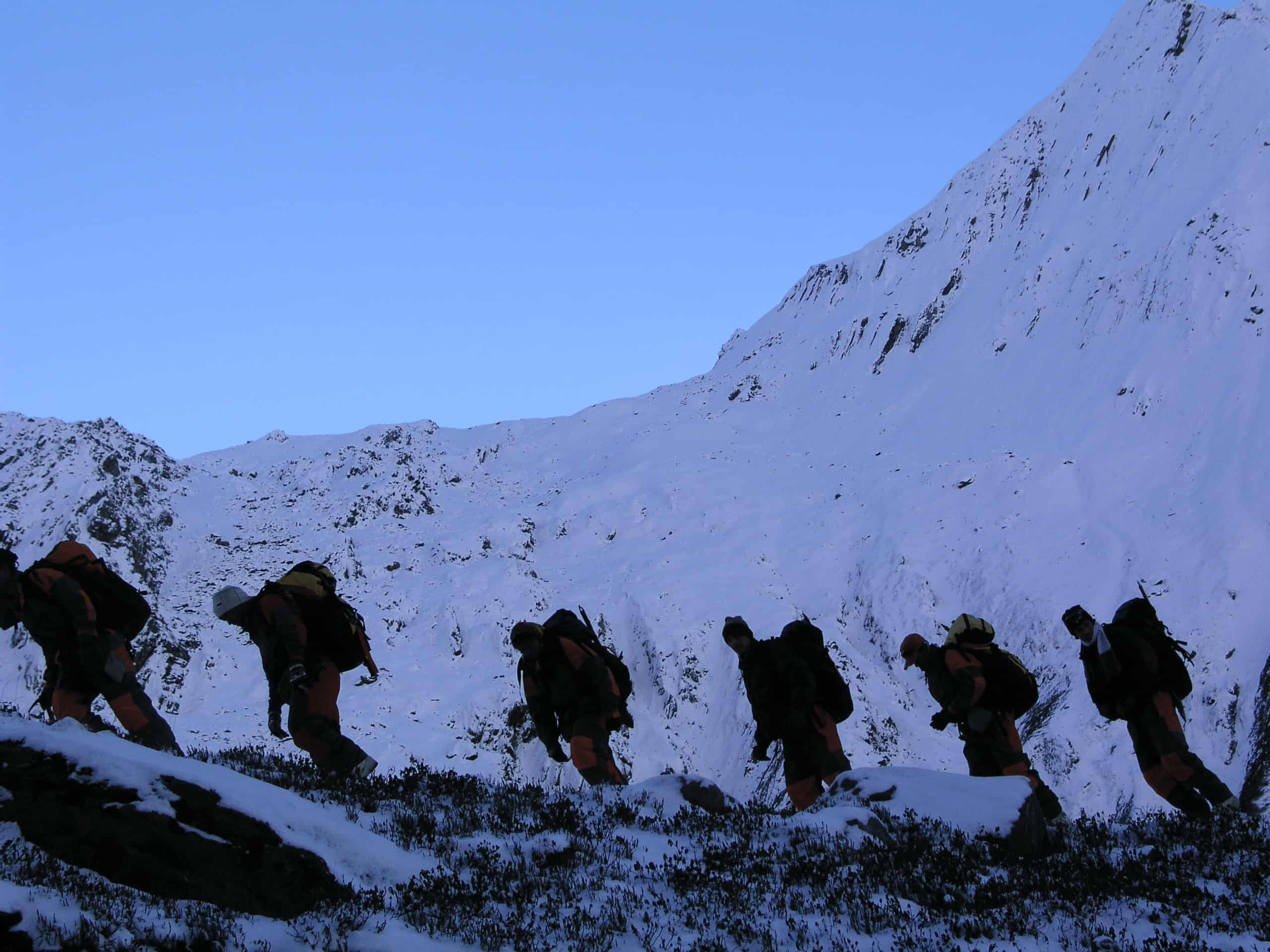
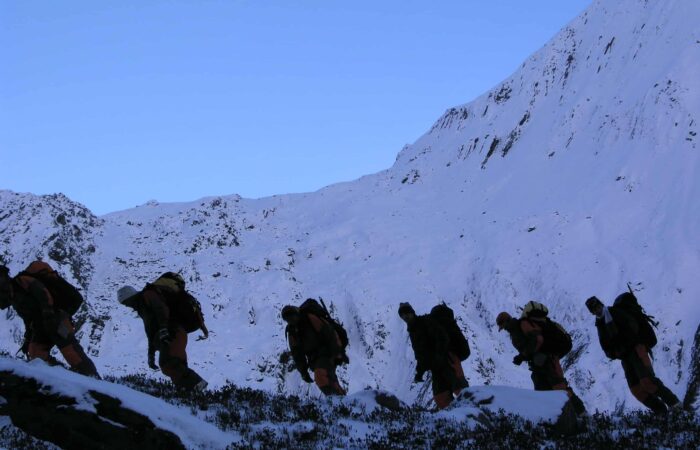
The day begins with a morning run and mobility exercises before leaving Sethan. A scenic drive to Dhundi marks the transition to the snow zone. From Dhundi, the group treks to Bakarthach, gradually adjusting to higher altitude. After lunch at camp, participants receive their snow gear crampons, ice axes, gaiters and trainers explain their use, safety, and adjustments. Afternoon includes knot practice and an introductory lecture on snow craft principles. Evening knot training consolidates rope handling before entering glacier terrain.
Hiking Distance: 3 km
Max Altitude: 3,500 m
Altitude Gain/Loss: +200 m
With reduced warm up to protect altitude adaptation, the day starts with light stretching and a short walk. The pre-lunch module introduces fundamental snow movement: proper footwork, flat-footing, step cutting, edging, and descending techniques. Participants practice walking on varied slopes to build confidence. Post lunch light activities include knot practice followed by a lecture on mountain hazards such as snowfall, cornices, and avalanche basics. The evening knot session reinforces rope skills needed for the coming glacier travel sessions.
Hiking Distance: 4 km
Max Altitude: 3,600 m
Altitude Gain/Loss: +300 m
The day begins with a gentle warm up walk around camp. The main training session involves advanced snow techniques sitting, standing, and dynamic self arrest with an ice axe; establishing T-anchors, deadman anchors, and snow belay positions. Participants practice rope up travel in small teams. After lunch, knot practice continues, followed by a lecture on risk assessment and slope analysis. The evening knot session reviews anchor knots and rope up knots important for snow terrain.
Hiking Distance: 4 km
Max Altitude: 3,700 m
Altitude Gain/Loss: +200 m
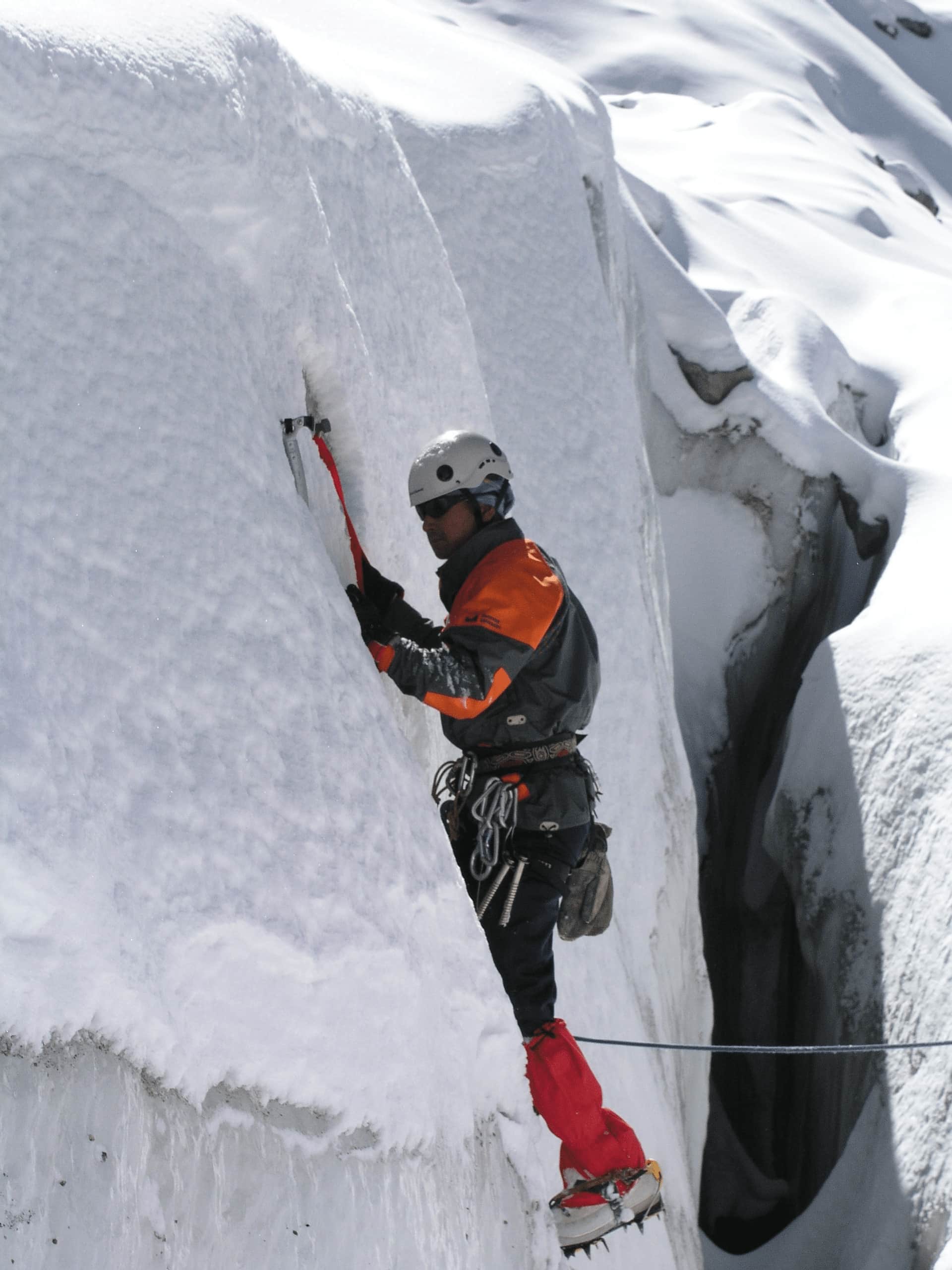
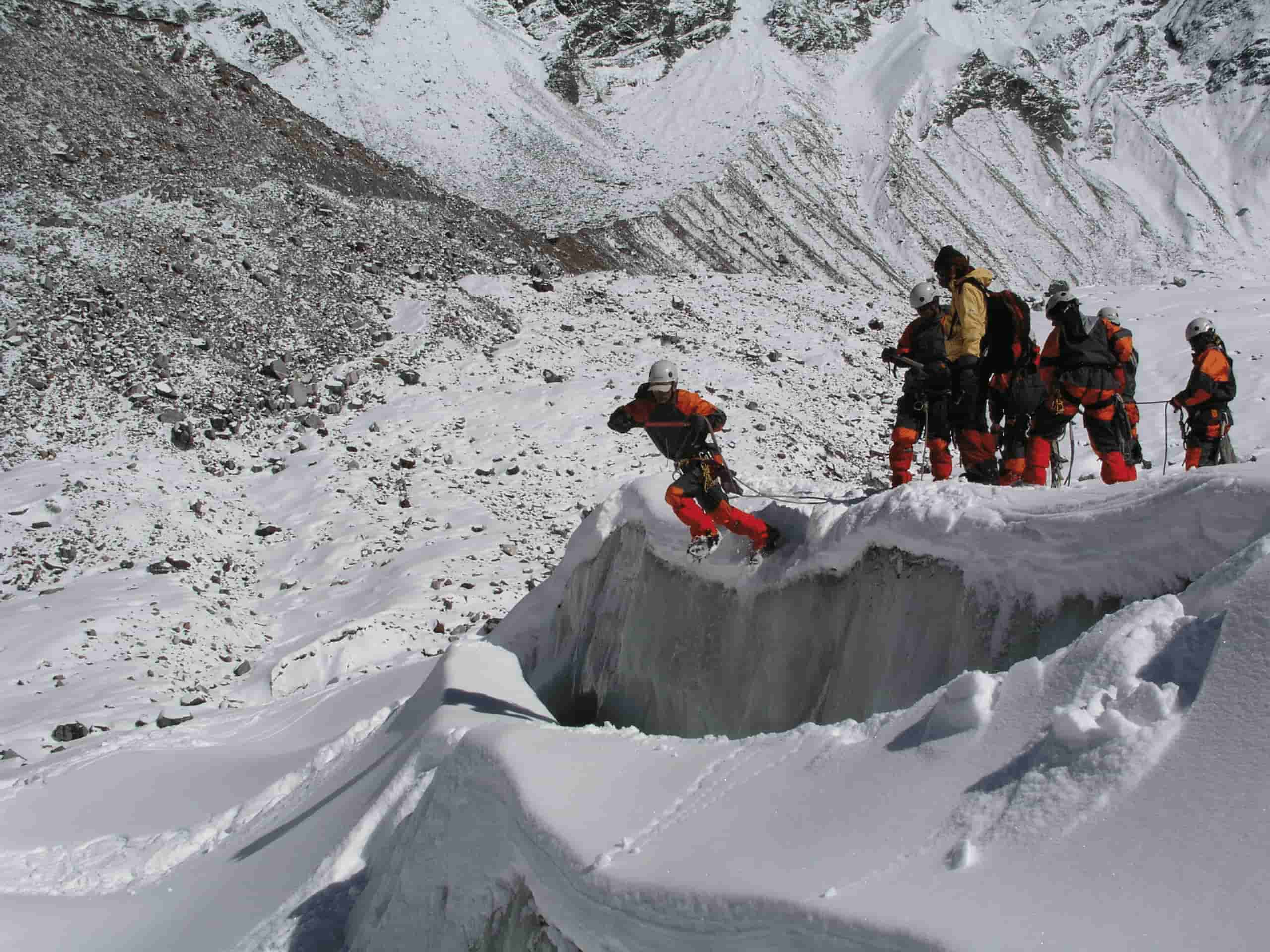
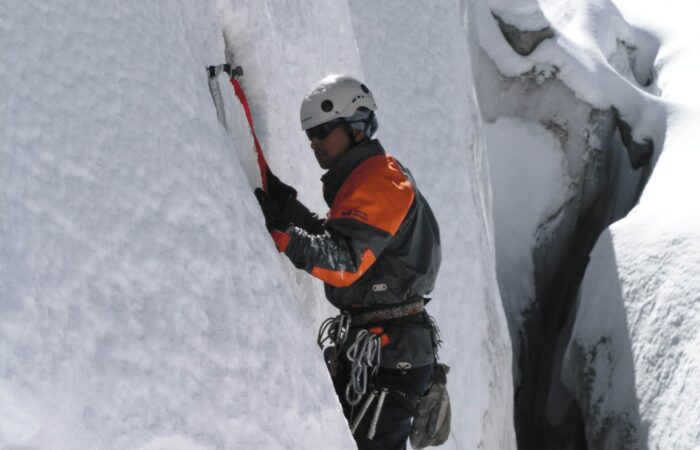
A mellow warm-up is followed by the trek to glacier training grounds. Pre lunch activities introduce ice axe placements, basic cramponing techniques, front pointing, and balance drills. Participants practice climbing short ice sections under instructor supervision. Afternoon knot practice is followed by a lecture on glacier formation, ice features, and crevasse awareness. The evening session reinforces knots used in ice anchors and fixed rope setups, ensuring smooth progression toward more demanding ice practice.
Hiking Distance: 5 km
Max Altitude: 3,900 m
Altitude Gain/Loss: +300 m
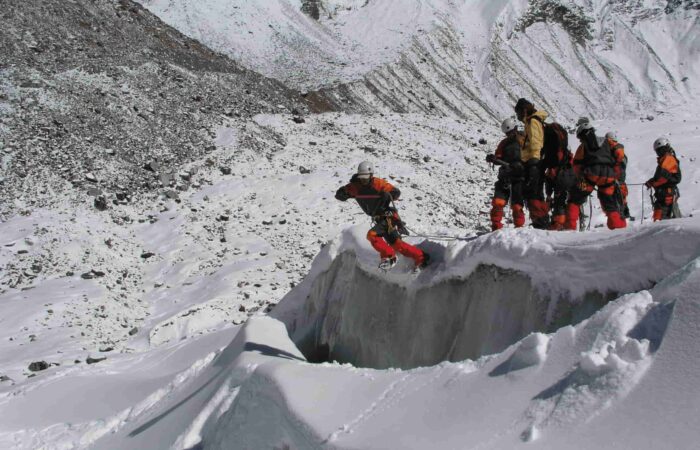
After a light warm up session, the team proceeds deeper into the glacier zone. Pre lunch training focuses on traversing glaciated terrain, using ice screws, practicing crevasse rescue basics, and understanding team movement on rope. Trainees learn how to arrest a fall, build ice anchors, and simulate rescue scenarios. Post lunch knot practice is followed by a lecture on glacier safety, rope spacing, and cold-weather decision-making. Evening knots reinforce prusiks, French prusiks, and rescue knots.
Hiking Distance: 5 km
Max Altitude: 3,900 m
Altitude Gain/Loss: +300 m
A light warm up leads into the day’s main activity: a full day mixed terrain simulation combining snow, ice, moraine, and steep sections. Participants practice transitioning between surfaces, adjusting crampons, and moving efficiently with ice axes. Instructors assess readiness for summit day. Post lunch includes knot practice and a lecture on summit strategies, pacing, hydration, and weather interpretation. Evening knot training reviews ascent and descent knots to ensure every participant is fully prepared for the Patalsu summit
Driving Distance: 20 km
Hiking Distance: 8 km
Max Altitude: 4,220 m
Altitude Gain/Loss: +800 m / –600 m
A pre dawn drive to Solang marks the start of summit day. After equipment checks, the team begins the ascent toward Patalsu Peak, gradually moving through forests, open ridges, and high altitude slopes. The pre lunch phase involves steady climbing under instructor supervision, focusing on safe footwork and pacing. Post lunch hours are spent on the upper ridge leading to Patalsu’s summit. After soaking in panoramic Himalayan views, the group descends to Solang for rest, recovery, and an informal evening review.
Hiking Distance: 6 km
Max Altitude: 4,220 m
Altitude Gain/Loss: –800 m
The day focuses on controlled descent practice and revisiting key technical skills used during the summit. Participants review cramponing, safe descending patterns, and rope team coordination. After lunch, lighter activities include knot practice and a lecture summarizing the entire course rock craft, snow craft, ice craft, safety, and ethics. The group enjoys a relaxed evening in Solang, packing gear and preparing for graduation. This final review day strengthens confidence in all core mountaineering fundamentals.
Driving Distance: 15 km
Hiking Distance: 0
Max Altitude: 2,050 m
Altitude Gain/Loss: –150 m
The final morning is dedicated to a formal closing ceremony where participants receive certificates acknowledging their successful completion of the Beginner Mountaineering Course. Instructors provide personalized feedback and highlight each trainee’s strengths and future improvement areas. After group photos and celebrations, the team drives back to Manali, concluding the journey. This day marks the finish of an intensive, skill-building Himalayan mountaineering experience that lays the foundation for future expeditions and higher-level training.
Technical climbing gear: ice axe, crampons, harness, helmet, jumar, ropes
Certified instructors and experienced mountain guides
All meals during the course
Transport: Manali to Sethan to Dhundi to Solang to Manali
Accommodation in A-shape tents with kitchen and dining tents
All required permits and environmental fees
Comprehensive medical kit and essential safety equipment
Course completion certificate
Personal clothing, outerwear, and trekking/mountaineering boots
Travel to and from Manali
Personal insurance (medical, travel, evacuation)
Any expenses not mentioned in the inclusions
Rental gear available at: Into Wild Himalaya Shop
• Trekking/Mountaineering Boots – high-ankle, waterproof (available for rent)
• Layered Clothing – thermal base layers, fleece jacket, down jacket, waterproof shell
• Trekking Pants – quick-dry; avoid cotton
• Gloves – inner fleece gloves + waterproof outer gloves
• Headwear – warm cap, sun hat, buff/neck gaiter
• Backpack (50–65L) with rain cover (available for rent)
• Daypack (20–30L) for daily essentials
• Personal Medical Kit – basic medicines, blister care
• Sunglasses (UV-protected) – mandatory for snow conditions
• Sunscreen & Lip Balm – SPF 50+ recommended
• Water Bottles / Hydration Bladder – minimum 2 liters
• Headlamp with extra batteries (available for rent)
• Personal Toiletries – biodegradable items preferred
• Trekking Poles (available for rent)
• Personal Snacks – energy bars, nuts, ORS
• ID Proof – mandatory for permits
Safety is our top priority. Our guides are trained First Aid Responders and prepared for high-altitude situations. Every trek, expedition, and motorbike tour includes a comprehensive first aid kit tailored for remote and high-altitude environments.
Core Medical Supplies
Wound Care: Bandages, sterile gauze, antiseptic wipes, antibiotic ointment
Blisters & Burns: Moleskin, burn gel, petroleum jelly
Fractures & Sprains: SAM splint, triangular bandage, compression wraps
Medications: Painkillers, antihistamines, anti-diarrheal, ORS, antacids, Diamox
Tools: Tweezers, scissors, gloves, CPR face shield, thermometer, pulse oximeter, whistle, mirror
Additional (for Remote/Extended Treks)
Tourniquet, emergency bandages, quick-clot gauze, sterile eye wash, foil blanket, water purification tablets
Optional Add-ons (As Needed)
Personal meds (inhalers, insulin, EpiPen)
Snake bite kit (in high-risk zones)
Tick remover (for forested routes)
High-Altitude Protocol
Above 4500 meters: A portable hypobaric chamber is always carried for emergency altitude management.
More than 30 days before your trip: 90% refund
15–30 days before: 50% refund
7–14 days before: 25% refund
Less than 7 days or no-show: No refund
Custom/private trips: Booking advance is non-refundable. Last-minute changes are subject to availability and costs.
For more details on our cancellation policy, please refer to the following link:
https://iwhexpeditions.com/cancellation_policy/