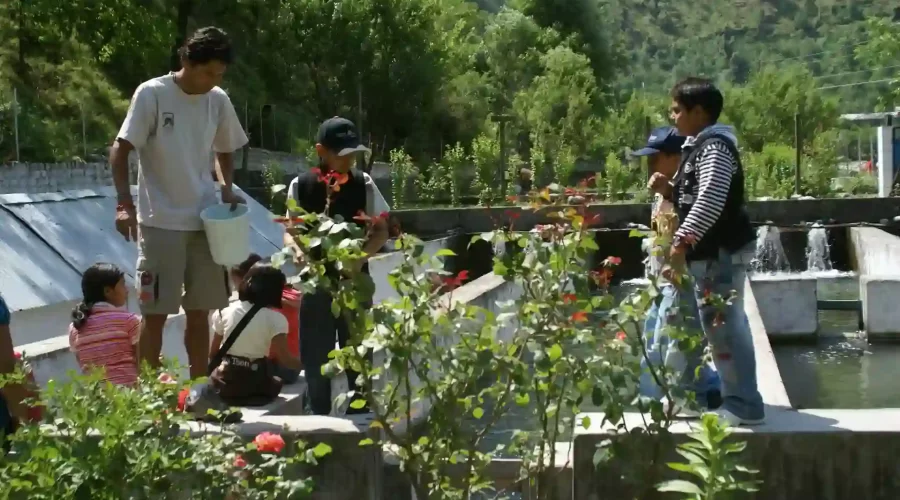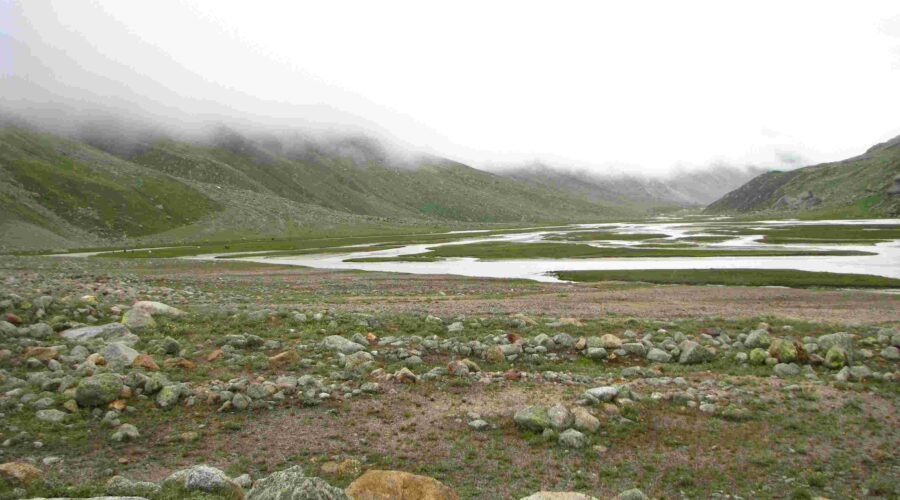
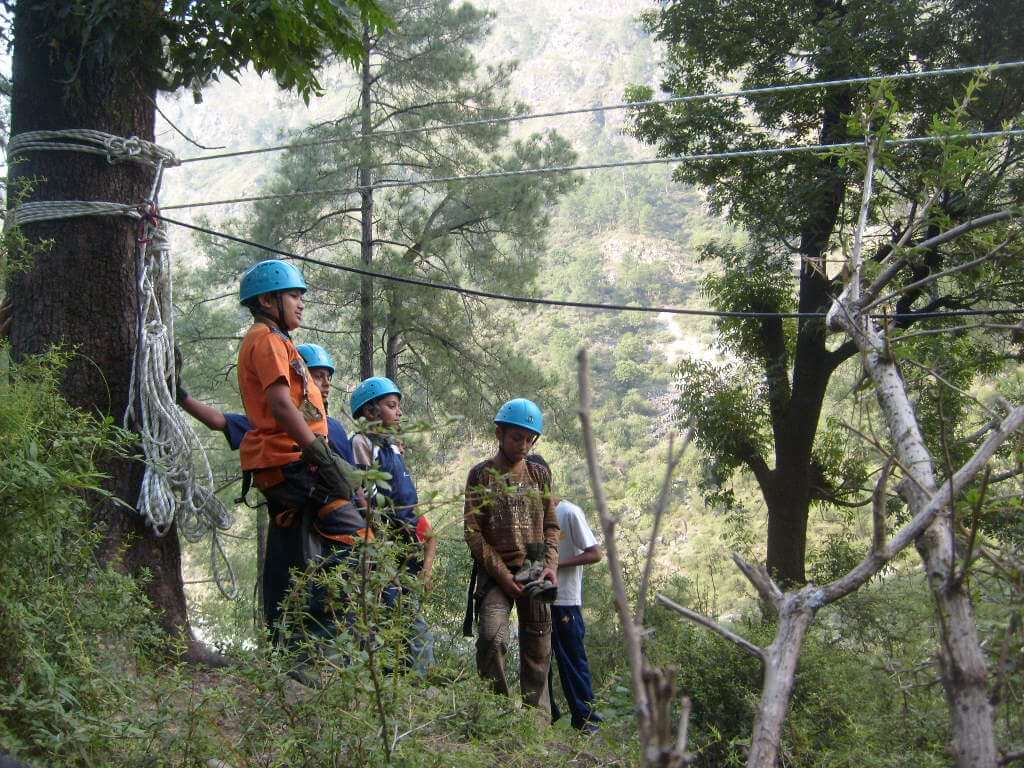
The School Survival Skills Program Himalayas is a hands on outdoor learning camp based in Manali, India, designed to teach students essential survival skills and teamwork. Through fire making, shelter building, navigation, and first aid training, students develop confidence, leadership, and resilience in a safe, supervised Himalayan setting.
Ideal for schools and youth groups, the program blends experiential education with real-world challenges. Guided by expert instructors, each day builds essential life skills while fostering self-reliance and environmental awareness. The School Survival Skills Program Himalayas offers an unforgettable learning experience in nature’s ultimate classroom.
HIGHLIGHTS:
Set in the stunning Himalayan wilderness near Manali, Himachal Pradesh
Teaches essential survival skills: fire-making, shelter-building, navigation, first aid
Structured modules led by trained outdoor educators and wilderness experts
Real-life adventure: supervised overnight solo camping expedition in buddy pairs
Builds teamwork, leadership, decision-making, and resilience through hands-on learning
Follows Leave No Trace (LNT) principles and environmental ethics
Safe, age-appropriate activities with 24×7 instructor supervision
Daily journaling, reflection, and group discussions to deepen learning
Ideal for schools seeking experiential outdoor learning programs
Pick up from New Delhi airport


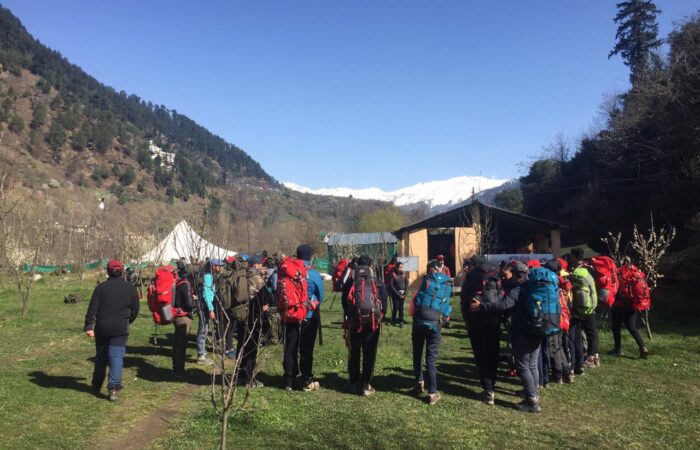

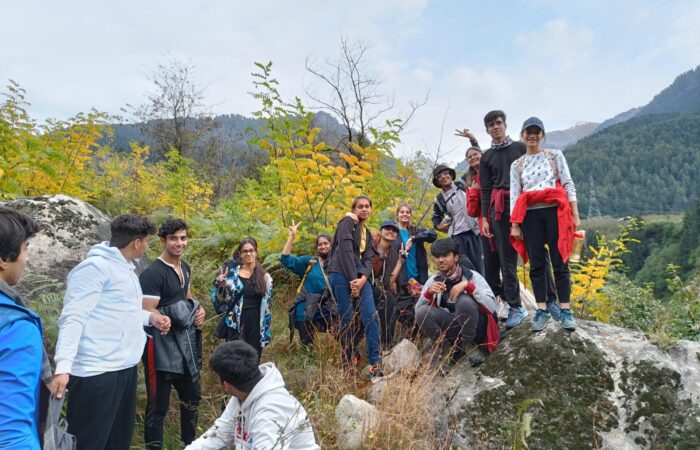
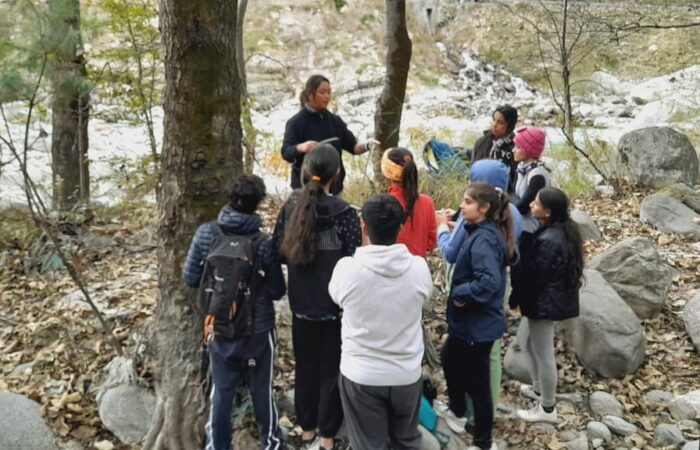
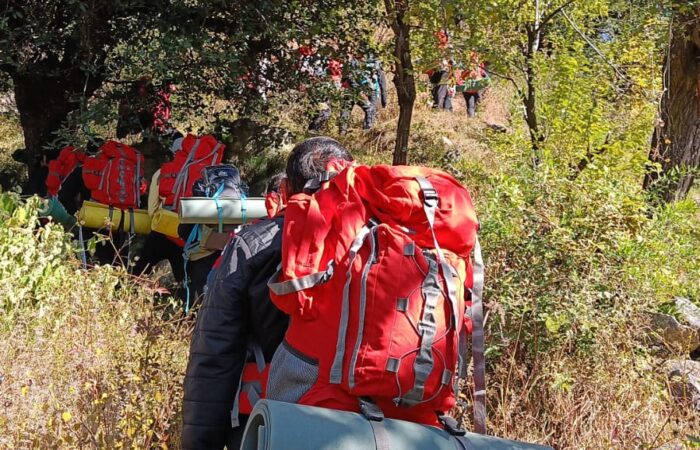
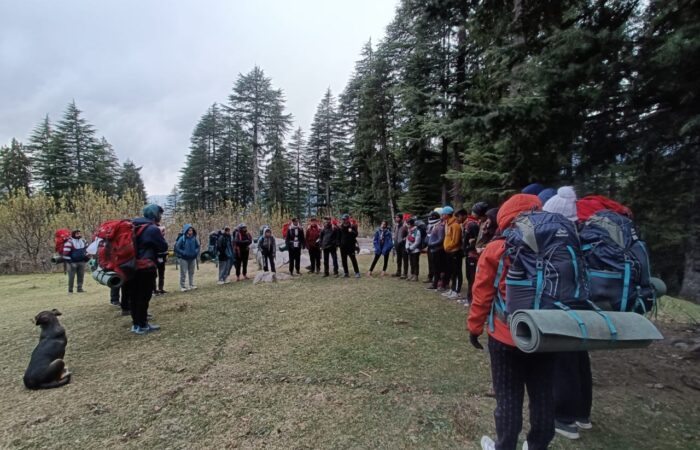
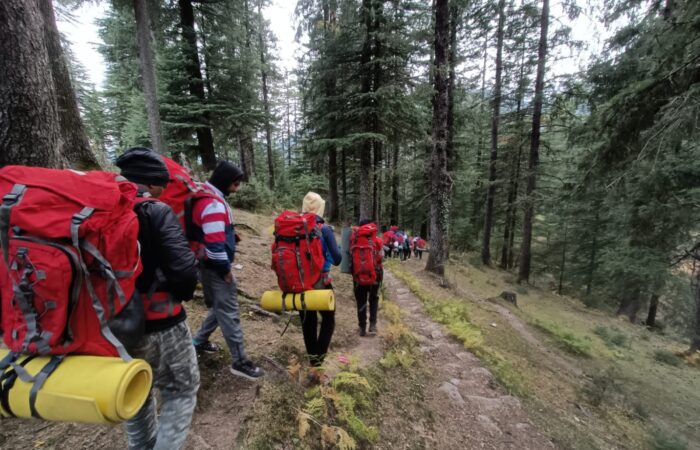
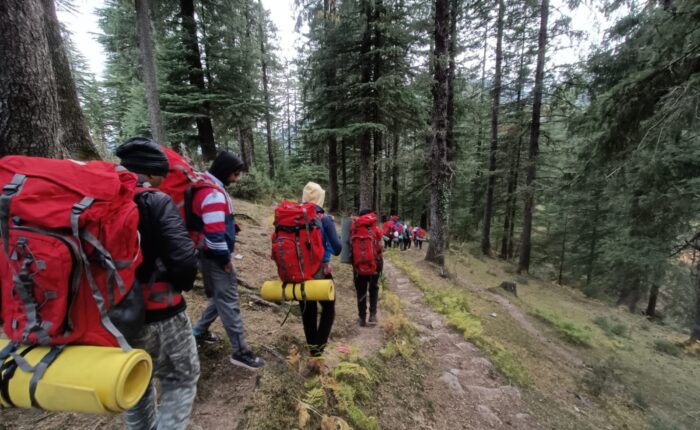
Total Hiking: ~2–3 km (wilderness walks)
Max Altitude: ~2,000 m / ~6,560 ft
Total Altitude Gain/Loss: Minimal
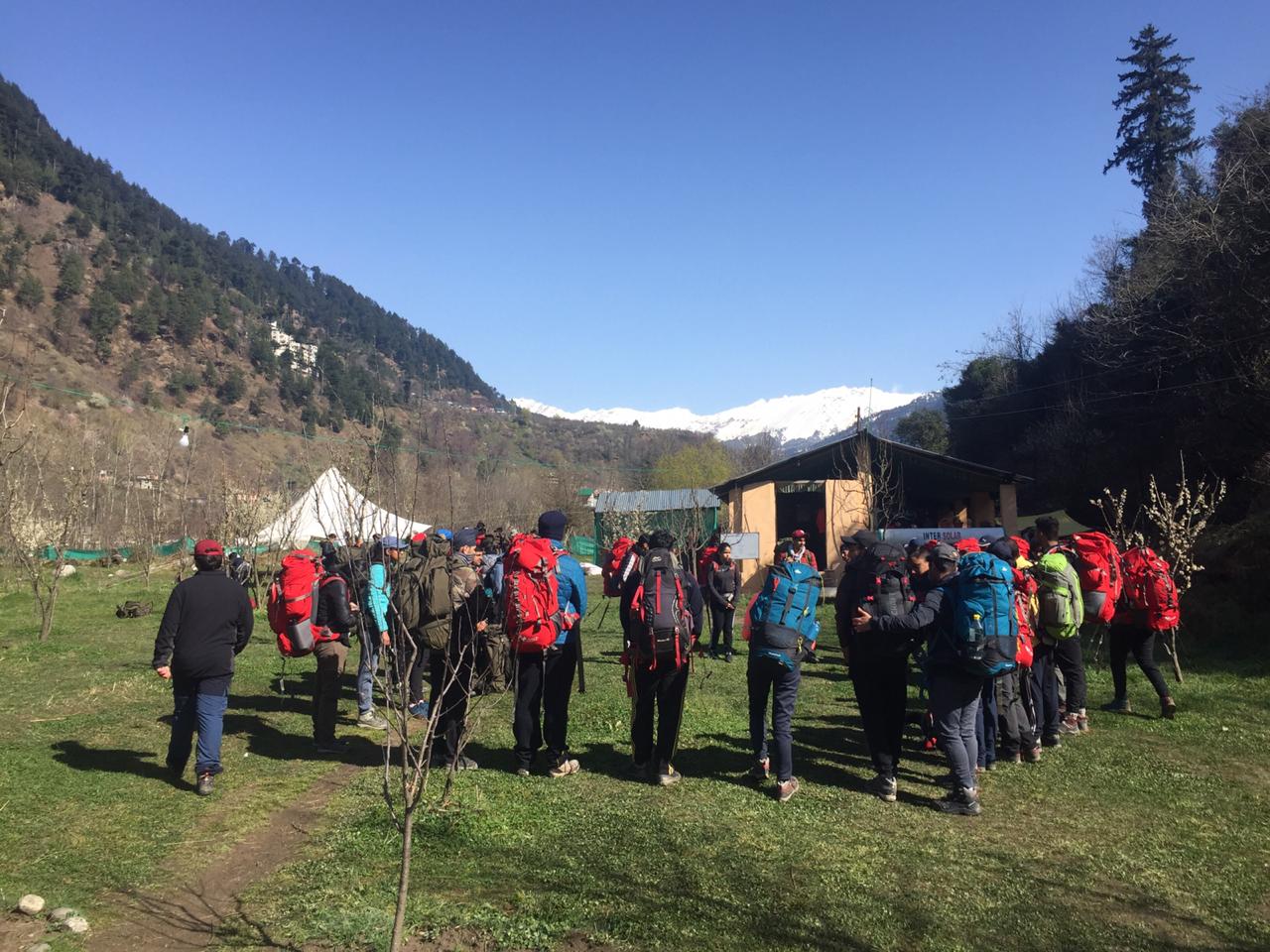
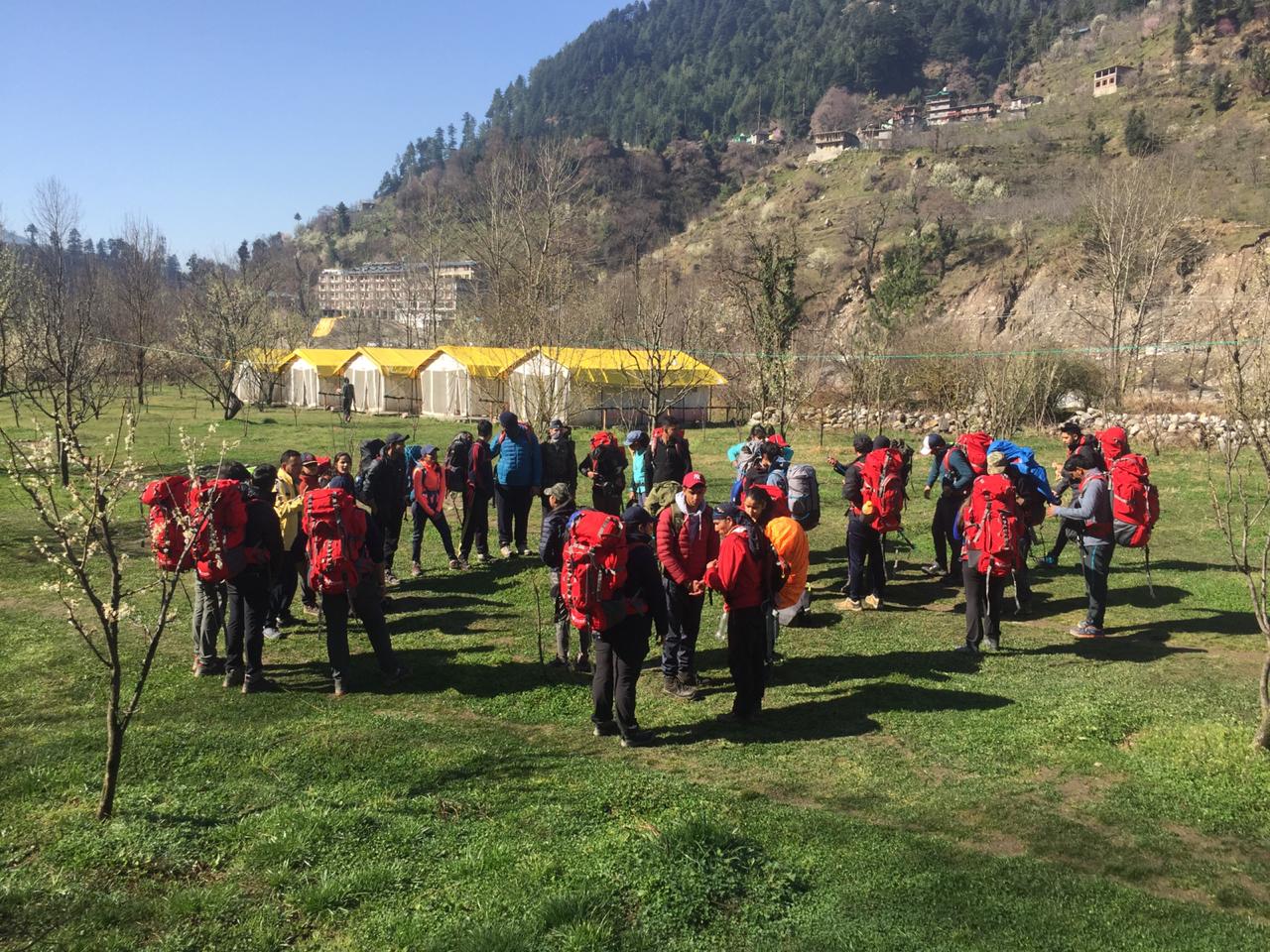
The program begins with students arriving at the Kalath Camp near Manali in the morning. After tent allocation, they receive a detailed safety briefing, including camp norms, emergency protocols, and a group wellness check to ensure everyone is acclimatized.
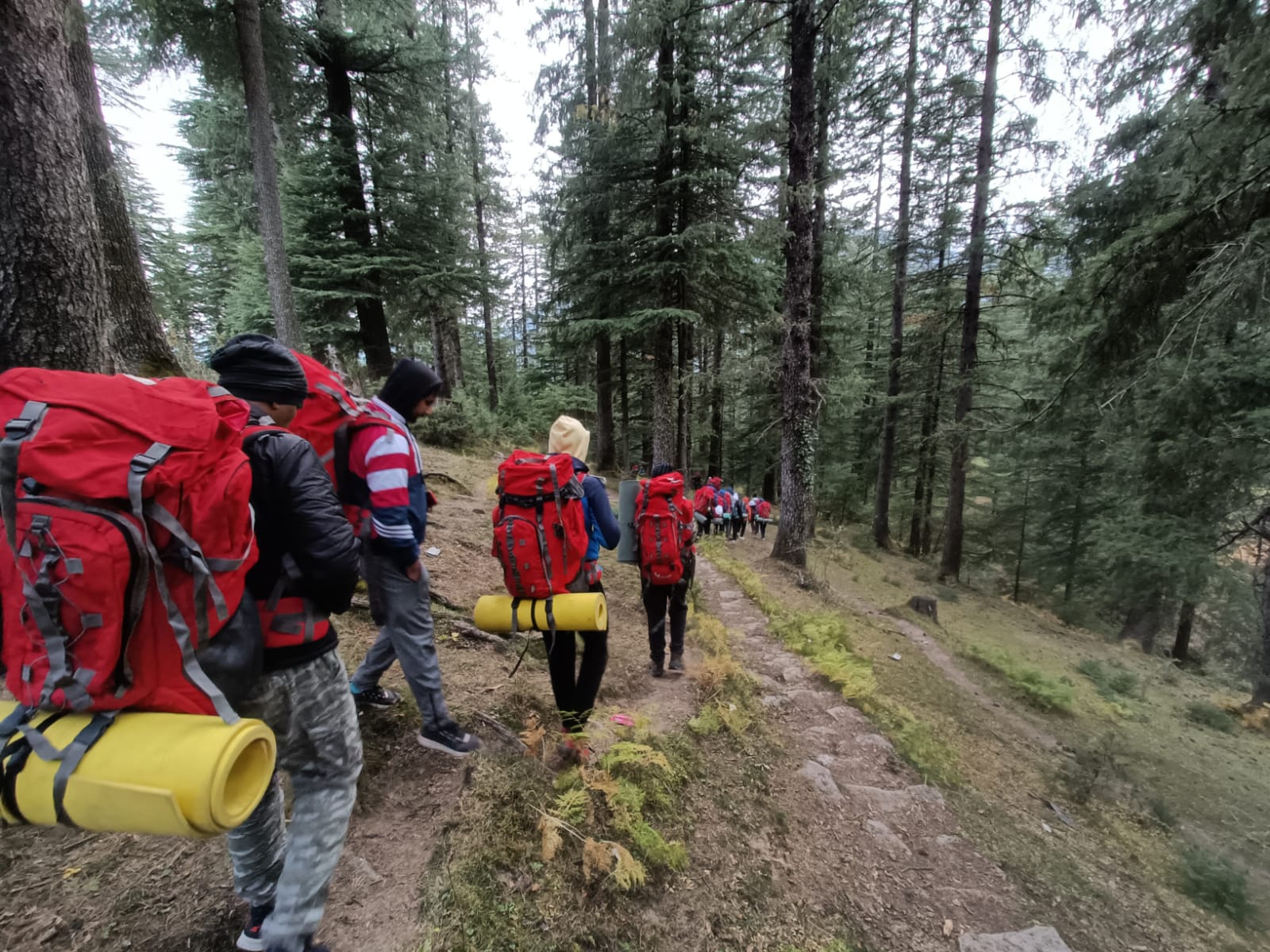
After breakfast (8:00 am – 8:30 am), students engage in expectation setting and group-building activities, followed by an introduction to the wilderness survival module and experiential learning methodology. They then set off on a short hike into the surrounding wilderness, learning how to manage themselves and others in varied outdoor environments.
The morning session focuses on:
Mountain manners & Leave No Trace (LNT) ethics
How to pack a backpack efficiently
Proper hydration, layering, and clothing
Recognizing objective vs subjective dangers in the outdoors
Getting familiar with individual survival gear
After returning, students break for lunch and freshening up (1:00 pm – 2:00 pm).
The afternoon module (2:00 pm – 4:30 pm) introduces map and compass navigation—a critical survival skill. They learn how to:
Read a sketch map
Take and follow bearings using a magnetic compass
Navigate to a destination independently using both
Following tea (4:30 pm), the first Wilderness First Aid session begins (5:00 pm – 6:30 pm). This module covers:
How to check for responsiveness (AO level)
Managing airways and vital signs
Key precautions to prevent becoming a second casualty
Students then move into a solo reflection period (6:30 pm – 7:15 pm), journaling thoughts and takeaways from the day using guided prompts.
Dinner is served at 7:15 pm, followed by an hour of campfire fun, games, and storytelling. By 9:45 pm, students retire to their tents for a well-earned rest under Himalayan skies.
Total Hiking: ~2–3 km (within and around camp)
Max Altitude: ~2,000 m / ~6,560 ft
Total Altitude Gain/Loss: Minimal
The day begins at 6:30 am with wake-up tea and light refreshments, followed by morning energizers—fun group games that help students shake off the chill and gear up for the day. This also includes functional instructions and a group wellness check.
After breakfast (8:00–8:30 am), students dive into two cornerstone wilderness survival skills: fire-making and shelter-building.
The morning session (8:30 am – 1:00 pm) includes:
Collecting and identifying types of wood fuel
Lighting and sustaining a fire using flint stones
Practicing Leave No Trace fire ethics and fire risk management
Buddy-based tasks to build and maintain a small survival fire
They’re then introduced to bivouac shelter-building:
Constructing improvised two-person shelters using tarps and guy ropes
Practicing multiple tarp-pitching techniques for varying terrains and weather
Learning useful knots and hitches like clove hitch, fisherman’s knot, and trucker’s hitch
Participating in a “shelter walk” to inspect and discuss each buddy pair’s setup
Post a break for bathing and lunch (1:00–2:00 pm), the afternoon focuses on Signalling and Rescue.
From 2:00–4:30 pm, students learn:
Visual signalling methods: smoke, mirrors (day) and fire, flashlight (night)
Group activity: one team simulates being lost, sending signals for help; the other interprets and coordinates a rescue mission
Emphasis on teamwork, observation, communication, and self-led execution with instructors only monitoring for safety
After snacks at 4:30 pm, the evening session introduces the second Wilderness First Aid module (5:00–6:30 pm), focused on musculoskeletal injuries. Through role plays and simulations, students learn to:
Identify sprains, strains, minor fractures
Use improvised splints, crepe bandages, and basic immobilization techniques
Understand how to support and protect an injured person in the wild
The day winds down with a solo reflection session (6:30–7:15 pm), allowing students to write in their journals, reflect on challenges, lessons, and team dynamics.
Dinner follows, and by 8:15 pm the group gathers for light-hearted camp fun—games, storytelling, and music around the fire. At 9:45 pm, students retire to their tents, closing another day of hands-on wilderness learning under Himalayan stars.
Total Hiking: ~3–5 km (survival trek & navigation)
Max Altitude: ~2,100 m / ~6,890 ft
Total Altitude Gain/Loss: Moderate
The day starts early with wake-up tea at 6:30 am, followed by morning hygiene and energizer games (7:15 am). These physical activities help shake off inertia, build group energy, and serve as a platform for sharing daily instructions and checking on individual well-being.
After breakfast (8:00–8:30 am), students begin the final wilderness first aid module: Wound Management (8:30–10:00 am). Through immersive role plays, they learn to:
Identify common wound types found in outdoor settings
Assess the seriousness of injuries
Administer aid to both conscious and unconscious casualties
Practice basic bandaging and emergency control measures
By mid-morning (10:00–11:30 am), students enjoy free time by the river, offering a welcome balance of fun and relaxation before they transition into the most demanding part of the program.
At 11:30 am, the group is formally briefed about the overnight survival expedition. This marks the culmination of all their acquired skills.
Each buddy pair is:
Given limited rations (food and water), basic shelter-building materials (tarp, rope), and personal gear
Equipped with essential survival tools: compass, flashlight, whistle, first-aid supplies, and sleeping bag
Assigned a destination on a sketch map, to be navigated using compass bearings and natural landmarks
On reaching the designated wilderness zone, each buddy pair must:
Choose a suitable campsite away from others
Build an improvised shelter
Start and sustain a campfire
Cook their dinner using the supplies provided
Spend the night entirely on their own in an isolated, quiet environment
To simulate real wilderness conditions:
Buddy pairs are placed out of sight from each other
No movement is allowed post-sunset, and inter-buddy communication is restricted
A discreet but secure instructor-led supervision system remains active all night
A base camp is known and accessible for emergencies, but students are instructed to approach it only in real need
This is a critical self-reliance challenge meant to develop resilience, judgment, and independence. All students are required to report back the next morning to base camp and clean up their bivouac sites in adherence to Leave No Trace (LNT) principles).
6.00 am – 8.30 am: Wake up followed by bivouac wind up and LNT. Some hot tea, coffee and cookies are given to the students as they report at the base camp. Post this, the group walk back to the camp for rest and rejuvenation.
8.30 am – 9.30 am: Breakfast, followed by rest and packing.
9.30 am – 10.30 am: A closure debrief, including an exercise in appreciation and learning take away.
10.30 am – Group will finally walk to the main road to take the Volvo coach to there respective place. Trip ends here….
Mountain Guide: Mountaineering qualified and First Aid Responder.
A Cook:Who can make Indian, Chinese, Italian food.
Helpers: To help the cook.
Horses:To carry the equipment and food.
All Equipment:Client Tents, Mattresses, Sleeping bags, Kitchen Tents, Toilet Tents, Dinning tent and all kitchen utensils.
Food:Breakfast, Lunch, Tea/snacks, Soup, Dinner.
Accommodation: Twin sharing a tent basis.
Transportation: To Starting and finishing of the trek and wherever it requires in the program.
First aid kit and Oxygen Canister:For in case of emergency.
Package Price does not include which is not mentioned in the inclusion list.
For details on our cancellation policy, please refer to the following link:
https://iwhexpeditions.com/cancellation_policy/