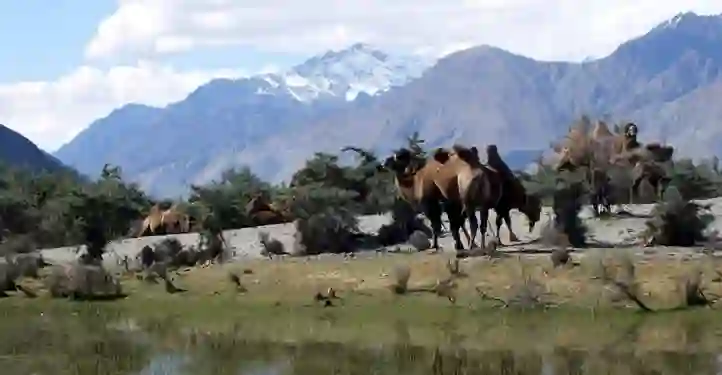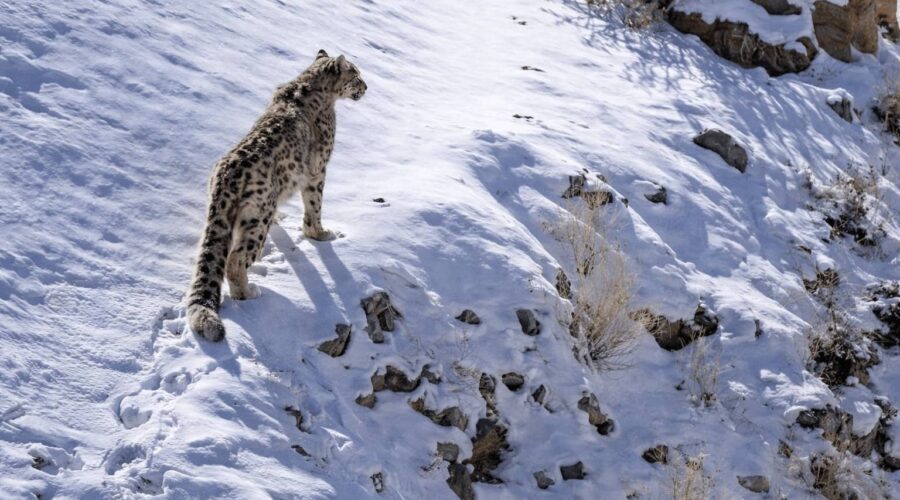
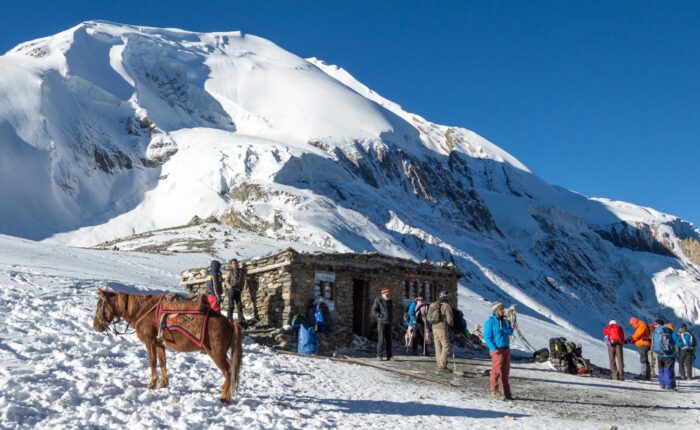
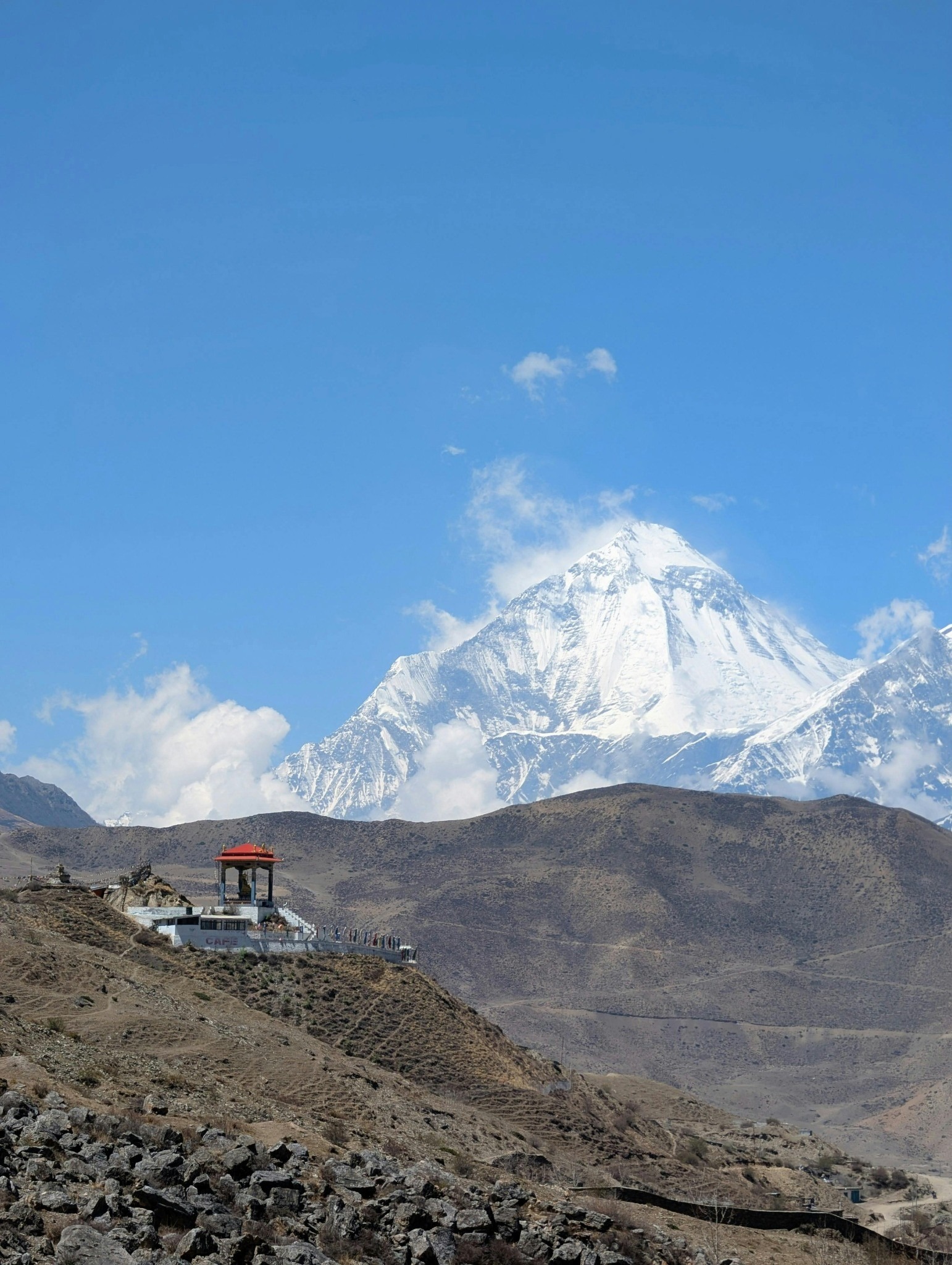


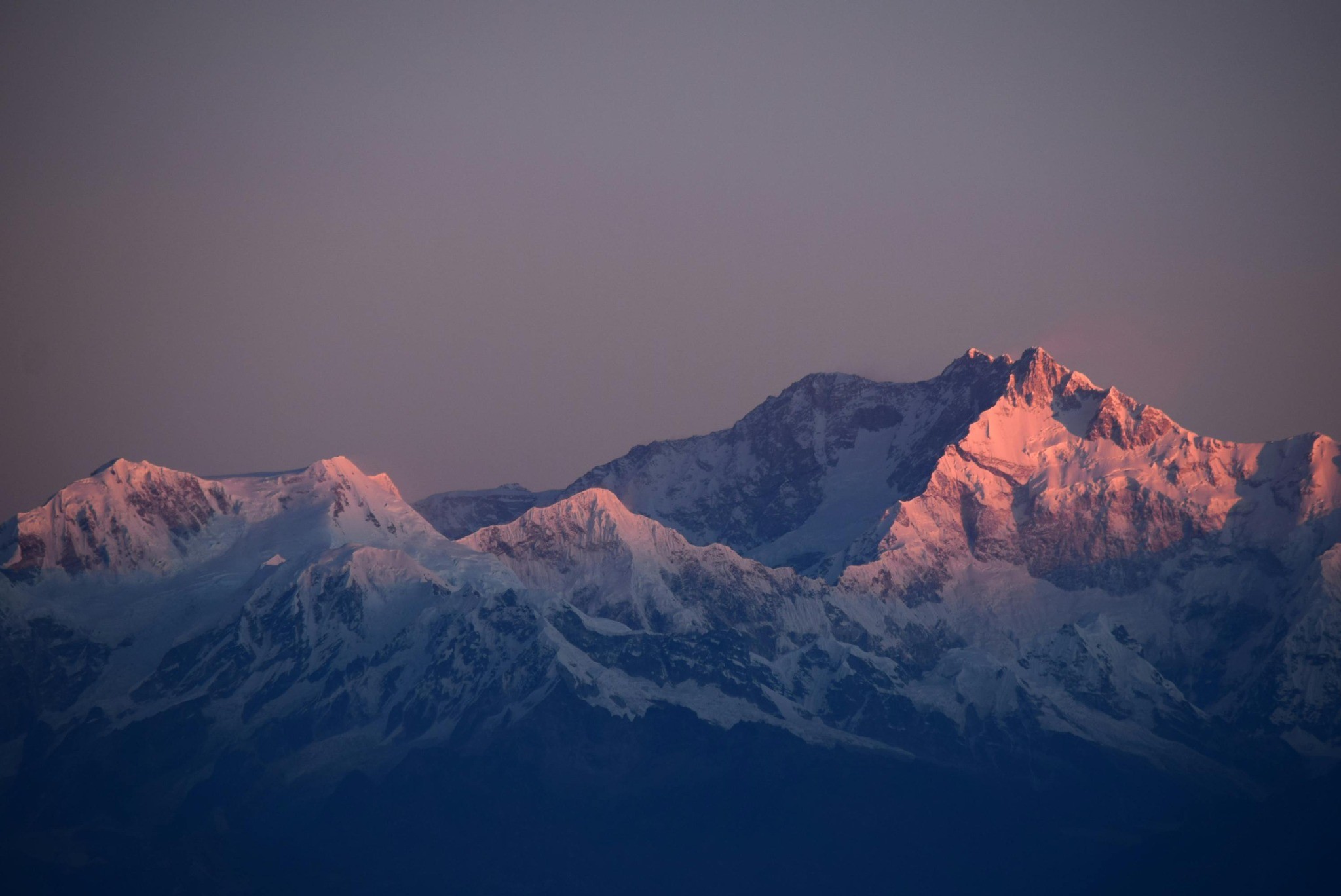


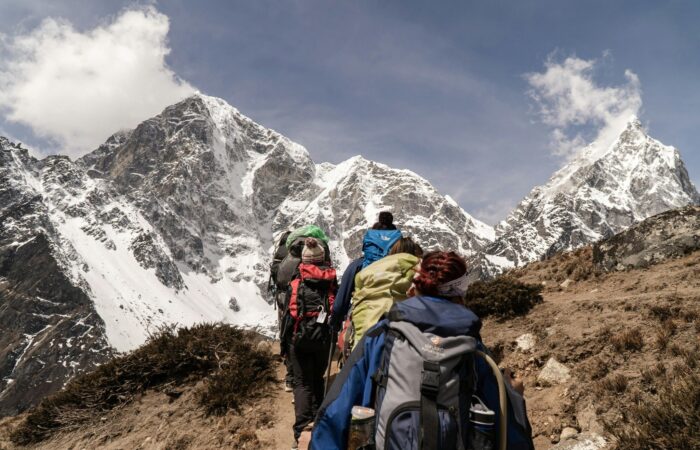

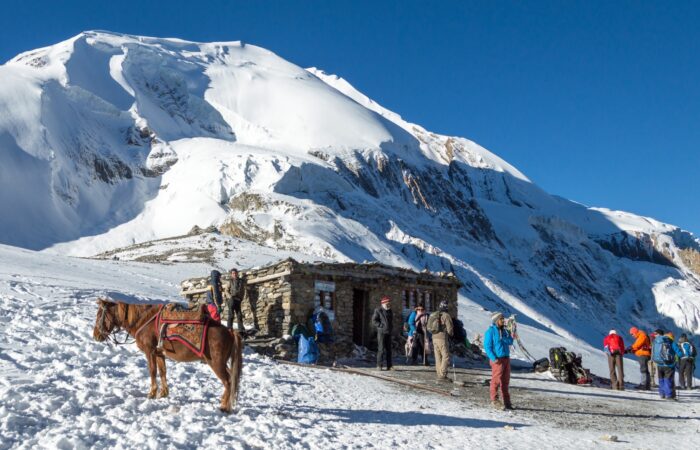
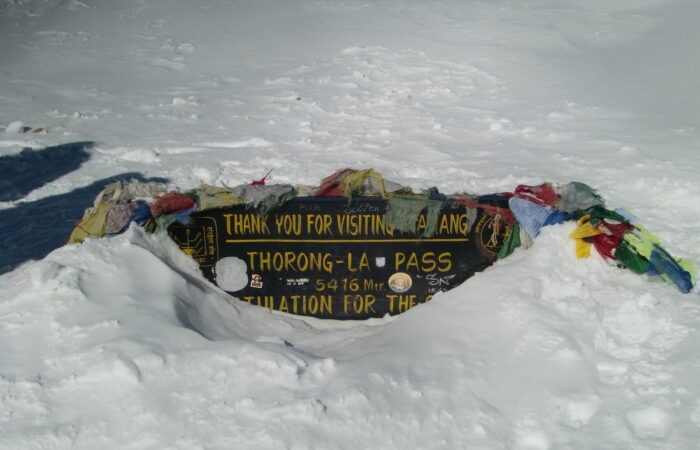
The Thorong Peak Climbing Expedition is an outstanding opportunity to experience peak climbing in Nepal while exploring the spectacular landscapes of the Annapurna Himalayas. Rising to 6,144 metres, Thorong Peak combines one of Nepal’s most iconic trekking regions with a rewarding Himalayan summit, making it an ideal objective for experienced trekkers progressing into high-altitude mountaineering.
With over 20 years of Himalayan expedition experience, Into Wild Himalaya delivers a founder-led climbing expedition supported by certified mountain professionals, structured acclimatisation and a safety-first approach. Throughout the expedition, climbers develop essential mountaineering skills including crampon techniques, ice axe use, rope travel and snow movement while following a carefully planned itinerary designed to maximise safety and summit success.
The Thorong Peak Climbing Expedition is an excellent introduction to Annapurna peak climbing, offering breathtaking views of the Annapurna, Dhaulagiri and surrounding Himalayan ranges. Whether you’re preparing for more technical expeditions or pursuing your first 6000m Himalayan summit, this expedition combines professional leadership, authentic mountain experiences and one of Nepal’s most rewarding climbing adventures.
Explore all climbs on our Mountain Climbing India & Himalayas page:
https://iwhexpeditions.com/tour-activity/mountaineering/
Learn more about Thorong Peak here:
https://en.wikipedia.org/wiki/Thorong_Peak
HIGHLIGHTS:
⭐ Summit Thorong Peak (6,144 m) along the iconic Annapurna Circuit
⭐ Ideal climb for trekkers transitioning into mountaineering
⭐ Trek through Manang, Ledar and Thorong Phedi for natural acclimatization
⭐ Learn basic mountaineering skills: crampons, ice-axe and rope techniques
⭐ Experience panoramic views of Dhaulagiri, Annapurna and Nilgiri
⭐ Safe ascent with certified guides, porters and acclimatization planning
⭐ Combine two adventures: Annapurna Circuit trekking and Himalayan peak ascent
⭐ Full expedition support and logistics managed by Into Wild Himalaya
🗻 Max Altitude: 1,350 m (4,429 ft)
A warm welcome in Kathmandu—airport transfer, hotel check-in, immersive evening briefing and Nepali welcome dinner to set the tone for your Himalayan adventure.
🗻 Altitude: 1,400 m (4,593 ft)
Spend the day in Kathmandu finalizing permits, checking gear, and picking up any missing equipment. Explore Thamel’s bustling streets before resting at your hotel.
🥾 Distance: 8 km
🗻 Altitude: 2,800 m (9,187 ft)
📈 Altitude Gain: 1,450 m
Touch down in Lukla and trek gently through rolling forest terrain beside the Dudh Koshi River, arriving into Phakding for your first Himalayan night.
🚗 Driving Distance: 65 km
🗻 Altitude: 3,250 m (10,663 ft)
📈 Altitude Gain: +2,490 m
Continue by jeep along rugged mountain roads to reach Lower Pisang. Enjoy views of Annapurna II and explore the village’s traditional Buddhist culture.
🥾 Trekking Distance: 15 km
🗻 Altitude: 3,450 m (11,318 ft)
📈 Altitude Gain: +200 m
Hike through alpine landscapes via Upper Pisang, known for its monastery and panoramic views. Arrive in Manang, a vibrant Himalayan settlement.
🗻 Altitude: 3,450 m (11,318 ft)
Take a rest day to acclimatize. Options include a hike to Gangapurna Lake or visits to cultural sites in Manang.
🥾 Trekking Distance: 10 km
🗻 Altitude: 4,000 m (13,123 ft)
📈 Altitude Gain: +550 m
Ascend through alpine meadows and pastures to Yak Kharka, a small settlement surrounded by towering Himalayan peaks. Overnight stay in a lodge.
🥾 Trekking Distance: 7 km
🗻 Altitude: 4,560 m (14,960 ft)
📈 Altitude Gain: +560 m
Climb steadily to Thorong Phedi, the base before Thorong La Pass. This high camp offers stunning evening views and prepares you for the push higher.
🥾 Trekking Distance: 6 km
🗻 Altitude: 5,416 m (17,769 ft)
📈 Altitude Gain: +856 m
Hike up to Thorong La Pass and then continue to establish Base Camp at the foot of Thorong Peak. Overnight in tents.
🗻 Altitude: 5,416 m (17,769 ft)
Full-day technical training on climbing gear, rope use, and glacier movement with expert guides. Essential preparation for the summit attempt.
🥾 Trekking Distance: ~10 km round-trip
🗻 Altitude: 6,144 m (20,157 ft)
📈 Altitude Gain: +728 m
📉 Altitude Loss: –728 m
Begin the pre-dawn ascent of Thorong Peak, using ropes and ice axe techniques. Reach the summit for panoramic views before descending to Base Camp.
🚗 Driving Distance: 140 km
🗻 Altitude: 1,190 m (3,904 ft)
📉 Altitude Loss: –4,226 m
Descend from the mountains to Tatopani. Relax in the region’s famous hot springs and celebrate the climb. Overnight in a lodge.
🚗 Driving Distance: 95 km
🗻 Altitude: 822 m (2,696 ft)
📉 Altitude Loss: –368 m
Travel to Pokhara, Nepal’s adventure capital, surrounded by lakes and mountains. Enjoy a free evening at Phewa Lake. Overnight in hotel.
🗻 Altitude: 1,400 m (4,593 ft)
📈 Altitude Gain: +578 m
Board a scenic flight back to Kathmandu. Spend the evening with a farewell cultural dinner to celebrate the expedition.
Arrival at Tribhuvan International Airport (TIA). Kathmandu, Nepal.
Departure From Tribhuvan International Airport (TIA). Kathmandu, Nepal.
Airport transfers to and from Tribhuvan International Airport (Kathmandu)
Domestic flights Kathmandu–Kathmandu
Accommodation in Kathmandu (3-star hotel, twin sharing, breakfast included)
Teahouse accommodation during trek, tents at High Camp
All meals during trekking and climbing (breakfast, lunch, dinner, hot drinks)
Professional climbing guide (IFMGA/UIAGM certified) and Sherpa support staff
Porters for luggage (carrying capacity 15 kg per client)
Group climbing equipment (ropes, tents, cooking gear)
Climbing permits for Peaks and National Parks
First aid kit and emergency oxygen at High Camp
Farewell Nepali cultural dinner in Kathmandu
International flights to/from Kathmandu
Nepal entry visa fees (on arrival at TIA)
Travel and climbing insurance (mandatory, covering rescue/evacuation)
Personal climbing gear (can be rented in Kathmandu)
Lunches and dinners in Kathmandu (except welcome/farewell dinners)
Alcoholic beverages, soft drinks, bottled water in Kathmandu
Tips and gratuities for guides, porters, and support staff
Expenses due to flight delays, cancellations, or natural causes
Rental gear available at: Into Wild Himalaya Shop
Valid passport, Nepal visa, and permits (kept waterproof)
Mountaineering boots (double boots recommended for summit)
Crampons compatible with boots
Climbing harness, helmet, and ascender/descender devices
Ice axe and trekking poles
Thermal base layers (tops and bottoms)
Down jacket and insulated trousers
Waterproof and windproof shell jacket/pants (Gore-Tex preferred)
Warm gloves (inner + insulated outer mittens)
Woolen hat/beanie and buff/neck gaiter
Sunglasses with UV400 protection & glacier goggles
Sleeping bag (-20°C comfort rating)
Personal first aid kit and prescription medication
Sunscreen SPF 50+ and lip balm with SPF
Hydration system (CamelBak + water bottles)
Energy snacks, gels, and electrolyte mixes
Backpack (50–65 L) and small daypack (20–30 L)
Headlamp with extra batteries
Power bank/solar charger
Toiletries, wet wipes, and biodegradable soap
Lightweight sandals or camp shoes
Travel adaptor (Type C/D/M for Nepal)
1. Trauma & Wound Care
• Hemostatic gauze (QuickClot/Celox) – 2 packs
• Tourniquet (CAT Gen 7) – 1-2
• Sterile gauze pads (10+ large sizes)
• Hydrogel burn dressings (for frostbite/rope burns)
• Butterfly sutures + Steri-Strips (wound closure)
• Liquid bandage (for blisters/cracks)
2. Altitude & Severe Medications
• Dexamethasone (for HACE) – 4mg tabs (10 doses)
• Nifedipine (for HAPE) – 20mg tabs (10 doses)
• Acetazolamide (Diamox) – 125mg tabs (20 doses)
• Ibuprofen + Paracetamol (pain/fever)
• Ondansetron (severe nausea/vomiting) – 4mg tabs
• Rehydration salts (ORS) – 10 packets
3. Frostbite & Cold Injuries
• Aloe vera gel (for superficial frostnip)
• Chemical hand warmers (10+ pairs)
• Vaseline/petroleum jelly (skin protection)
4. Advanced Tools
• Portable hyperbaric chamber (Gamow bag)
• Pulse oximeter (with spare batteries)
• Digital thermometer (low-range for hypothermia)
• Syringe + IV kit (for trained medics only)
• SAM splint (for fractures)
5. Consumables & Misc.
• Surgical gloves (10 pairs, nitrile)
• CPR face shield
• Emergency blanket (foil, 2–3 units)
• Chlorine dioxide tablets (water purification)
Key Differences from Trekking Kits:
• Altitude-specific drugs (Dexa/Nifedipine for life-threatening AMS).
• Bleeding control (tourniquets, hemostatic gauze for crevasses/rockfall injuries).
• Team redundancy: Guides carry duplicate kits in case of separation.
• Hypothermia focus (Gamow bag, low-range thermometer).
Pro Tips for Climbers:
• Divide supplies between climbers (never all in one pack).
• Label medicines clearly with dosages/use cases (altitude drugs confuse many!).
• Pre-trip medic training (e.g., IV use, HAPE/HACE identification).
More than 30 days before your trip: 90% refund
15–30 days before: 50% refund
7–14 days before: 25% refund
Less than 7 days or no-show: No refund
Custom/private trips: Booking advance is non-refundable. Last-minute changes are subject to availability and costs.
For more details on our cancellation policy, please refer to the following link:
https://iwhexpeditions.com/cancellation_policy/