
Border and permit conditions on this route change frequently — verify current status before booking travel.
A motorcycle journey from Nepal into Tibet is one of the most distinctive ways to experience the Himalayas. The journey can begin in the busy streets and lower valleys around Kathmandu before climbing through the Himalayan foothills, crossing the Nepal–China border and emerging onto the vast Tibetan Plateau.
But a Nepal-to-Tibet motorcycle expedition is very different from an ordinary international motorcycle road trip. The riding is only one part of the challenge. Border procedures, Tibet travel permits, vehicle documentation, altitude, weather, route restrictions and changing access conditions all have to be considered before the journey begins.
There is also an important reality for travellers planning a trip now: the main Rasuwagadhi–Gyirong crossing has been severely affected by flooding. A glacial lake outburst flood on 26 August 2026 destroyed the Nepalese border infrastructure, including the Miteri Friendship Bridge and the road and customs facilities around Rasuwagadhi. As of late September 2026 the crossing remains closed, travel into Gyirong County is not being permitted, and there is no fixed reopening date. Nepal has asked China to help rebuild the 16 km Syaphrubesi–Rasuwagadhi road, and a temporary track is being prepared, but recovery timelines are being discussed in terms of 2027 rather than weeks.
This does not make the Nepal–Tibet motorcycle journey irrelevant. It makes current route verification even more important. This guide explains the traditional routes, the permit structure, the border-crossing process and the practical realities international riders should understand before planning the journey.
Routes and Border Crossings
Can you ride from Nepal to Tibet by motorcycle?
Yes — organised motorcycle journeys between Nepal and Tibet are an established form of Himalayan adventure travel. However, international riders should not think of the journey as simply renting a motorcycle in Kathmandu, riding to the border, crossing into Tibet and continuing to Lhasa.
Tibet operates under a different travel and permit framework from ordinary international motorcycle destinations. Foreign travellers generally need to travel through an authorised Tibet travel arrangement, with the required Tibet Travel Permit and additional documentation depending on the route. Motorcycle journeys can also require vehicle and driving documentation beyond the standard tourist permits. The logistics therefore need to be organised before the motorcycle enters Tibet. The challenge is not simply riding the road; it is managing the entire journey.
The classic Nepal to Tibet motorcycle route
The best-known overland journey follows the corridor Kathmandu → Nepalese Himalayan foothills → Rasuwagadhi → Gyirong → Tibetan Plateau → Shigatse → Lhasa. Depending on the itinerary, riders can continue towards Everest Base Camp, Tingri, Shigatse, Lhasa, Namtso, western Tibet, or Mount Kailash and Lake Manasarovar.
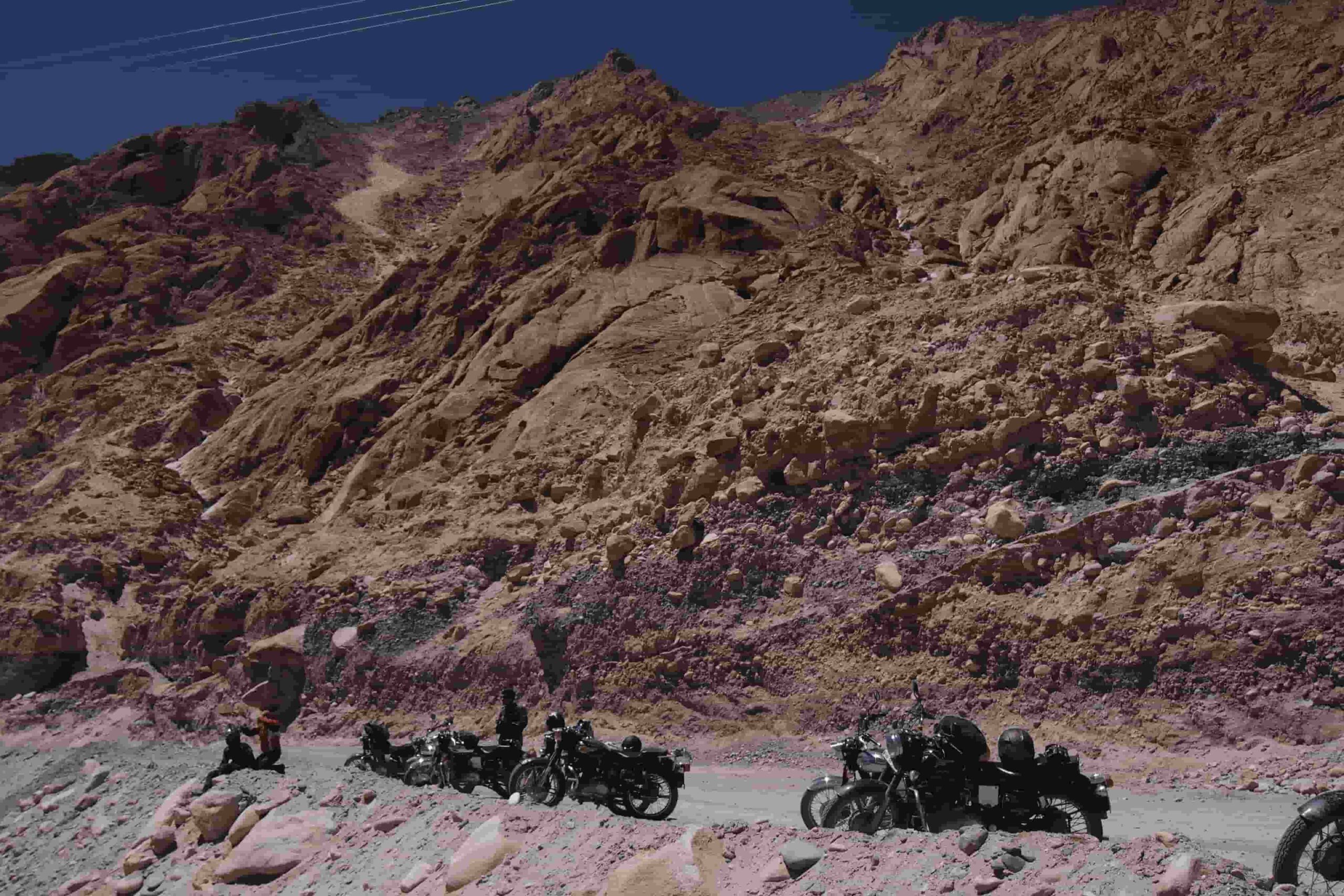
The exact route depends on current permissions, road conditions and the objectives of the expedition. For a motorcycle traveller, the attraction is the dramatic geographical transition. You begin in the relatively lower-altitude environment of Nepal and gradually climb into one of the highest inhabited regions on Earth, where steep Himalayan valleys give way to enormous open plateau landscapes. Our own 15-day Nepal to Tibet motorcycle tour is built around that corridor.
Why the border crossing matters
The border crossing is not simply a line on a map. It is where two different road, immigration, customs and travel systems meet. The traditional overland route uses the Rasuwagadhi–Gyirong corridor, which has historically been the principal overland route for organised international tourism between Nepal and Tibet, connecting Nepal’s Rasuwa region with Gyirong County in Tibet.
The 2026 Gyirong border situation
On 26 August 2026, severe flooding in the Bhote Koshi region destroyed the Rasuwagadhi border infrastructure, including the Miteri bridge, customs facilities and sections of the road corridor. As of September 2026, the crossing remains closed and authorities are not permitting travel into Gyirong County.
This is exactly why an article about Nepal–Tibet motorcycle travel should not publish a fixed statement such as “the Gyirong border is open year-round”. Mountain border infrastructure can be affected by landslides, floods, road damage, security restrictions and administrative decisions. The same crossing was closed for roughly six months after the July 2025 flood and reopened on a temporary Bailey bridge in January 2026, only to be destroyed again seven months later. A professional expedition operator should verify the crossing status immediately before departure and maintain an alternative plan where possible.
Are there other Nepal–Tibet routes?
There are several historical and geographic crossings between Nepal and Tibet, but not every crossing is available to international tourists, private vehicles or motorcycle expeditions at any particular time. The Zhangmu/Kodari corridor is another important connection, and its administrative arrangements have also been changing; in September 2026 China announced a relocation of the Zhangmu customs inspection site and associated road restrictions.
This illustrates an important point: a route shown on a map is not automatically a route available to a foreign motorcycle expedition. The relevant questions are:
- Is the border crossing open?
- Is it open to foreign tourists?
- Is motorcycle traffic permitted?
- Can the required vehicle documentation be arranged?
- Are the necessary Tibet permits available?
- Are there temporary restrictions?
- Are roads on both sides operational?
These questions should be answered close to departure rather than relying on an old itinerary found online.
Route options
Rather than treating Nepal–Tibet as one fixed route, it is better to think of it as a series of possible expedition structures.
| Route | Corridor | Character |
|---|---|---|
| 1. Kathmandu → Gyirong → Shigatse → Lhasa | Classic overland concept | The most straightforward way to connect Nepal with central Tibet, subject to border availability |
| 2. Kathmandu → Gyirong → Everest → Shigatse → Lhasa | Adds the Tibetan Everest region | More expedition-oriented; introduces additional permit and route considerations |
| 3. Nepal → Tibet → western Tibet | Extends towards Kailash, Manasarovar and Ngari | A specialist journey requiring considerably more planning, permits and local logistics |
The further an expedition travels into border and restricted areas, the more important current permits, local logistics and route verification become. Everest access in particular should never be assumed to be automatically included in a Tibet itinerary.
Permits, Paperwork and the Riding Reality
What permits do you need to ride from Nepal to Tibet?
There is no single “Tibet motorcycle permit”. The documentation depends on nationality, entry route, itinerary, border areas and whether the journey includes restricted destinations. For international travellers it usually comes in several layers.
- Tibet Travel Permit. The fundamental document required for foreign travellers entering the Tibet Autonomous Region, generally arranged through an authorised Tibet travel agency rather than obtained independently.
- Chinese visa or applicable entry arrangement. Requirements depend on nationality and current Chinese entry rules. Entering Tibet from Nepal can differ from entering mainland China through another gateway; some travellers may require a China Group Visa arranged in Kathmandu, while current visa-free arrangements may apply to eligible nationalities under specific conditions.
- Additional Tibet permits. Routes towards Everest, border areas or western Tibet can require permissions beyond the basic Tibet Travel Permit, including restricted-area and border-management permits.
- Vehicle and motorcycle documentation. A foreign rider is not simply bringing a Nepal-registered rental motorcycle across an international border and continuing freely through Tibet. Vehicle arrangements, temporary driving documentation and insurance need to be organised under current regulations.
Rules change, so the visa and permit situation should always be checked for the rider’s nationality before booking flights or finalising the expedition.
Can you ride independently in Tibet?
For foreign travellers, Tibet should not be approached like a normal self-guided motorcycle destination. Current travel information indicates that foreign visitors travelling overland in Tibet must use an authorised travel arrangement, with the required permit and an organised itinerary. Even an experienced rider capable of navigating the roads may still need an authorised agency, a defined itinerary, local guide and support arrangements, the Tibet Travel Permit, additional permits, vehicle documentation and temporary driving authorisation.
The practical question is therefore not “Can I physically ride a motorcycle across Tibet by myself?” It is “Can my nationality, route, vehicle and travel arrangement legally operate in Tibet under the current regulations?”
What is riding in Tibet actually like?
The Tibetan Plateau is unlike the Himalayan roads most riders experience in Nepal or northern India. The scale changes. Roads can run for long distances across enormous open landscapes with relatively little settlement — high plateau, barren mountain valleys, grasslands, high passes, remote villages and long open roads.
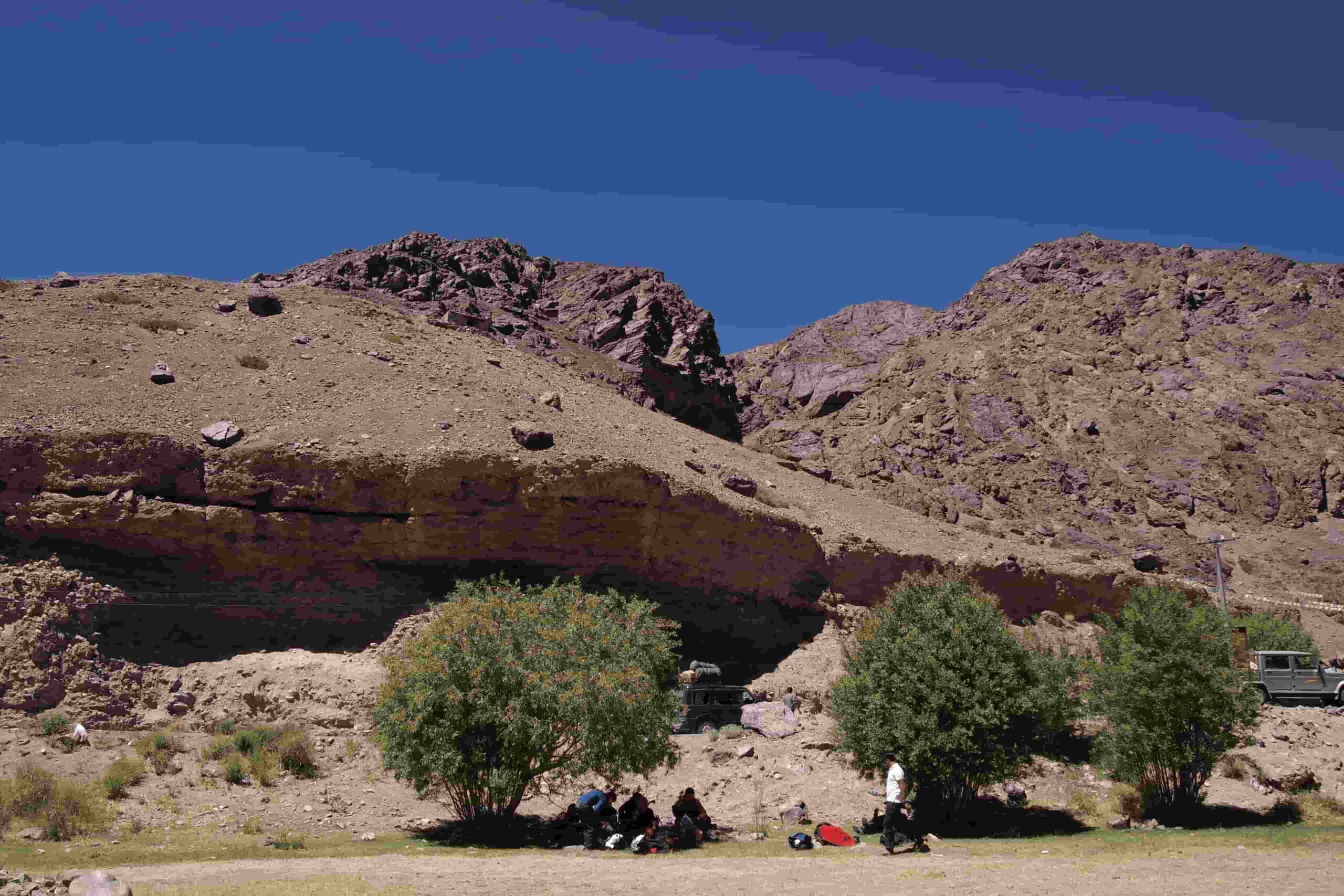
The road itself may be relatively smooth in places, but altitude changes the experience. The challenge is often not technical cornering; it is endurance. Long distances, high elevation, cold temperatures, strong winds and limited services combine to make the riding physically demanding.
How the riding changes between Nepal and Tibet
| Nepal | Tibet | |
|---|---|---|
| Landscape | Greener mountain landscapes, steep valleys | Enormous open spaces, high-altitude plateau |
| Roads | Narrower mountain roads, variable surfaces | Long-distance roads across open terrain |
| Settlement | Denser human activity | Fewer settlements, long gaps between services |
| Conditions | Warmer, more humid at lower elevations | Colder, more exposed, strong winds |
| Main demand | Road surface and traffic | Altitude, distance and endurance |
Kathmandu is a busy South Asian capital surrounded by hills, valleys and dense settlement. Lhasa is a high-altitude Tibetan city on the plateau. The journey between them is not simply a cross-border road trip — it is a transition between two dramatically different mountain environments, which is what makes the route attractive to riders interested in experiential Himalayan travel rather than collecting another destination.
The altitude challenge
Altitude is one of the most important considerations. The journey can move from relatively low elevations in Nepal to a plateau where many roads and settlements already sit at several thousand metres. The body needs time to adapt, and a rider who feels perfectly healthy in Kathmandu cannot assume they will feel the same after rapidly gaining several thousand metres. A sensible itinerary should allow progressive acclimatisation, rest and flexibility rather than treating altitude as an afterthought. The same principle applies on any high-altitude Himalayan journey.
Why weather matters
Tibet is often associated with clear skies and dramatic blue horizons, but high-altitude weather can change rapidly: strong winds, sudden temperature drops, snow, rain or sleet, dust, low temperatures and reduced visibility. A motorcycle expedition therefore needs flexibility. A road that is technically open in the morning may become much more difficult later in the day.
Motorcycle logistics across the border
One of the biggest differences between a Nepal motorcycle tour and a Nepal–Tibet expedition is the complexity of the vehicle arrangements. The motorcycle has to become part of an international travel and regulatory system. Depending on the expedition structure, arrangements may include registration documents, temporary import and customs procedures, insurance, temporary driving authorisation, vehicle permits, Tibet travel documentation, local guide and support, border inspection and customs clearance.
The exact requirements vary according to the motorcycle, nationality, route and current regulations. This should be treated as an operator-managed logistics process, not something riders improvise at the border.
What happens at the Nepal–Tibet border?
A border crossing on an international motorcycle expedition is rarely as simple as showing a passport. The rider and motorcycle may need to pass through separate stages:
- Nepal immigration
- Nepal customs and vehicle procedures
- The border crossing itself
- Chinese/Tibet immigration
- Customs and vehicle procedures
- Permit verification
- Onward travel clearance
The exact sequence depends on the border and current arrangements. This is where an experienced local logistics team becomes valuable, because a delay at the border can affect the entire itinerary.
Is this journey suitable for every rider?
Not necessarily. Previous Himalayan riding experience is useful, particularly because the journey combines several challenges at once. A rider should be comfortable with long days on a motorcycle, high-altitude environments, changing road surfaces, cold conditions, remote travel, border procedures, following a fixed expedition itinerary and adapting to changes caused by weather or access restrictions. Technical riding ability is only one part of the equation — mental flexibility matters just as much. A border crossing may take longer than expected, a road may close, an itinerary may need to change. Riders newer to Himalayan conditions often start with a Nepal motorcycle tour or a Ladakh expedition first.
When is the best time to go?
There is no single universal answer, because the best travel period depends on the route and current access conditions. The key factors are Nepal monsoon conditions, Tibetan road conditions, snowfall, high-pass accessibility, border operations, permit availability, local weather and current administrative restrictions. These should be checked close to departure rather than relying on a fixed historical travel window.
What should you pack?
The equipment list depends on the itinerary, but riders should prepare for a high-altitude expedition rather than a normal road trip:
- Proper motorcycle riding gear
- Waterproof outer layers
- Warm insulating layers
- Thermal base layers
- Gloves
- Riding boots
- Eye protection
- Sun protection
- Hydration system
- Personal medication
- Passport and travel documents
- Copies of required permits
- Suitable luggage
- Communication equipment where applicable
The key is layering. Conditions change significantly between the Nepalese foothills and the Tibetan Plateau.
Everest and Mount Kailash
A Nepal–Tibet expedition can potentially include the Tibetan side of Mount Everest, depending on the current route and permits. The Tibetan approach is dramatically different from the Nepal trekking route: instead of approaching Everest on foot through the Khumbu, riders travel across the plateau towards the northern side of the mountain. Everest access carries its own route and permit requirements. Western Tibet adds another level again — Mount Kailash and Lake Manasarovar lie in a highly remote part of the plateau with additional access and permit considerations, and should be planned as a specialist journey rather than a few extra days added to a Kathmandu–Lhasa tour.
Responsible motorcycle travel in Nepal and Tibet
Long-distance Himalayan motorcycle travel comes with a responsibility to minimise its impact. Riders should remain on permitted roads, avoid unnecessary off-road riding, carry waste out of remote areas, respect monasteries and religious sites, avoid disturbing wildlife, respect local communities, follow photography restrictions, use local services where appropriate and comply with all border and environmental regulations. The most remote landscapes are often also the most fragile.
Planning a Nepal–Tibet Motorcycle Expedition
Why local expedition knowledge matters
A route map can tell you where a road goes. It cannot tell you everything about operating an expedition there. Local knowledge becomes particularly important when dealing with border procedures, road conditions, changing access, local accommodation, motorcycle logistics, altitude planning, weather, route alternatives and emergency coordination. This is one of the reasons we approach Himalayan travel as an operational discipline rather than simply selling a route.
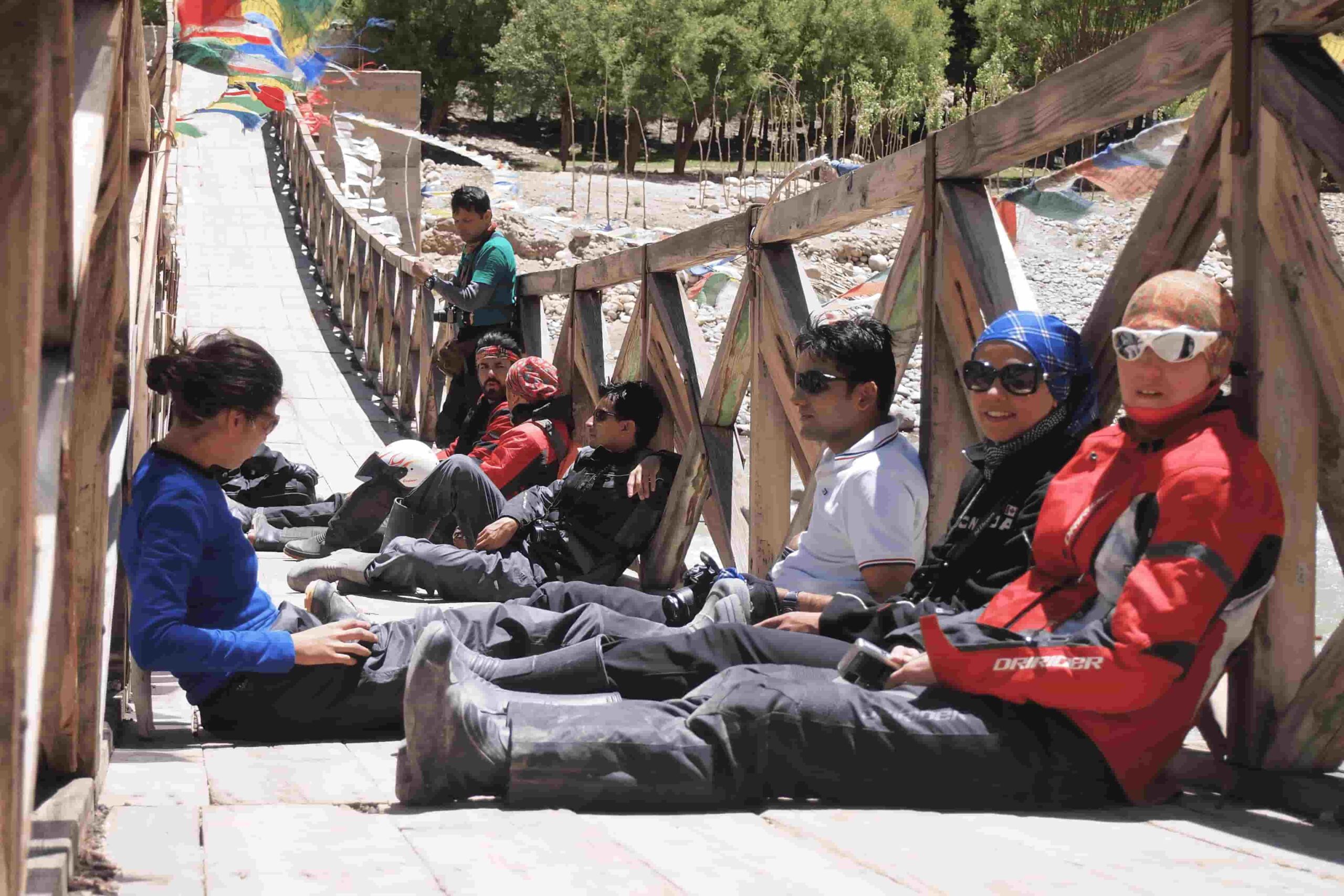
How we plan these journeys
A Nepal–Tibet motorcycle journey should be designed around current operating conditions rather than copied from an old itinerary. Our approach to international Himalayan motorcycle expeditions rests on five principles:
- Route planning. We assess the current road and border situation rather than assuming an old route remains available.
- Permit coordination. The required documentation is identified according to nationality, route and destination.
- Mountain logistics. High-altitude travel requires careful planning around accommodation, transport, support and changing conditions.
- Experienced leadership. Riders benefit from leaders who understand the realities of long-distance Himalayan travel.
- Flexibility. Border closures, weather, road damage and administrative restrictions can require an itinerary to change.
The objective is not simply to reach Lhasa. It is to create a well-managed journey across one of the world’s most extraordinary mountain regions.
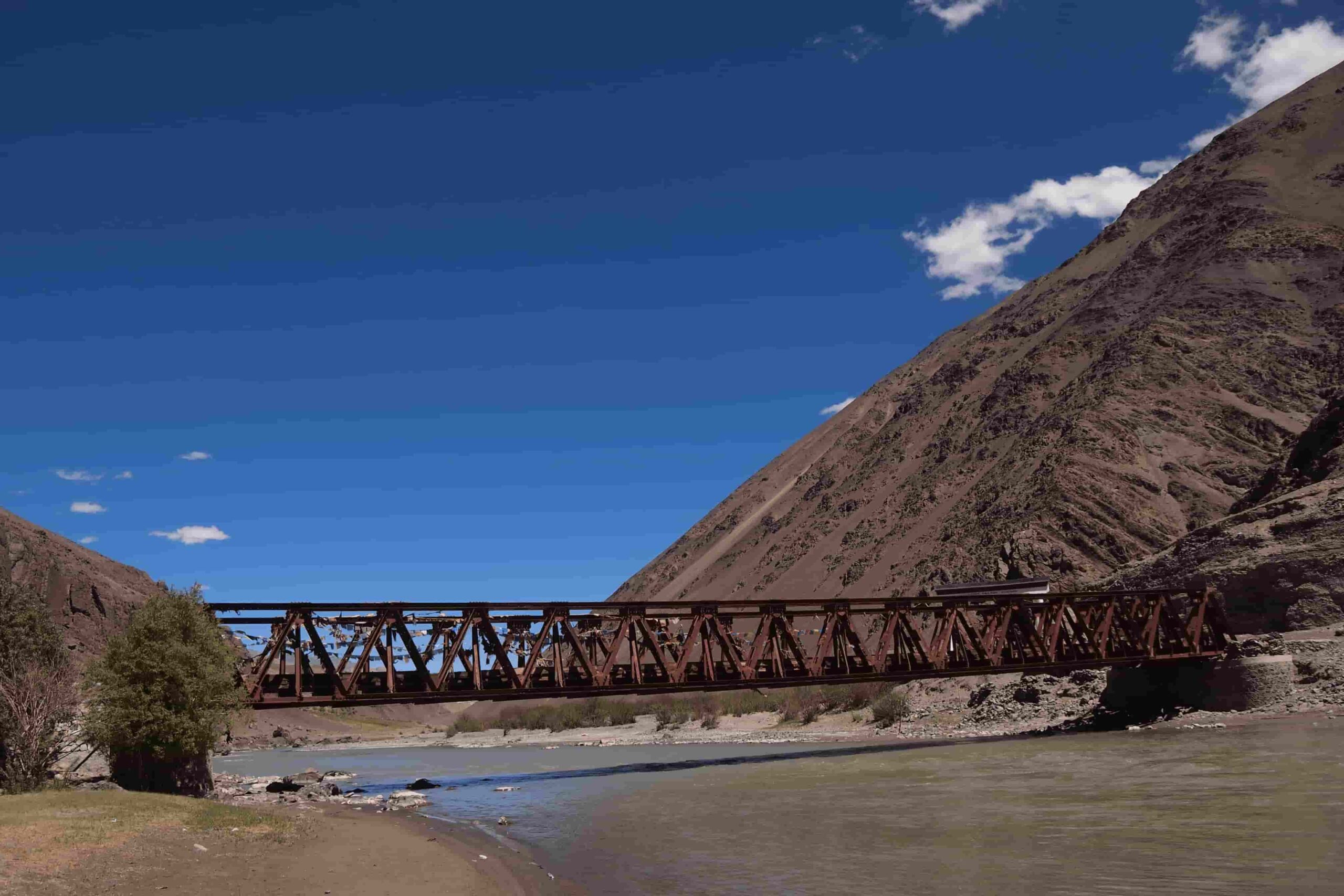
The reality of riding from Nepal to Tibet
A Nepal–Tibet motorcycle journey is not simply a road trip between two countries. It is a transition between two Himalayan worlds. You begin among Nepal’s steep valleys, rivers and mountain communities, then cross an international border before climbing towards the vast Tibetan Plateau, where the landscape becomes more open, more remote and dramatically higher.
The motorcycle gives you an unusual way to experience that transition. But the motorcycle is only one part of the expedition. The route, permits, border procedures, altitude, weather and logistics all have to work together — and in the Himalayas, they do not always behave according to a timetable prepared months in advance. That is the reality of the journey.
For riders who understand that, and who approach the route with preparation, flexibility and respect for the region, a Nepal–Tibet motorcycle expedition becomes far more than a journey to Lhasa. It becomes a genuine Himalayan expedition connecting Nepal, Tibet and some of the world’s most extraordinary mountain landscapes.
Thinking about this route? Talk to our team about current border status, permits and dates, or see our Nepal to Tibet motorcycle tour.
Frequently asked questions
Organised motorcycle journeys between Nepal and Tibet are possible when the relevant border crossing, permits and travel arrangements are available. Current access must be checked before departure because border conditions can change.
Foreign travellers can participate in organised motorcycle journeys in Tibet, but they must comply with the applicable Tibet travel and vehicle regulations. Independent motorcycle travel is not equivalent to normal self-guided riding in mainland China.
Requirements depend on nationality, route and destinations. The Tibet Travel Permit is fundamental for foreign travellers, while additional permits may apply to areas such as Everest, border regions or western Tibet. Motorcycle and driving documentation may also be required.
The situation is changing. The Rasuwagadhi–Gyirong crossing was severely damaged by flooding on 26 August 2026 and travel into Gyirong County is not presently permitted. Travellers must check the current status before departure.
The classic route is broadly Kathmandu → Rasuwagadhi → Gyirong → Tibetan Plateau → Shigatse → Lhasa, with optional extensions towards Everest or other Tibetan destinations depending on current access.
The journey can be organised as a Kathmandu–Lhasa motorcycle expedition when the relevant border crossing and permits are available. It should be treated as a multi-stage expedition rather than a simple road transfer.
Vehicle arrangements depend on current regulations and the specific motorcycle and expedition structure. Foreign riders should not assume that a Nepal-registered motorcycle can simply cross the border and be ridden independently in Tibet.
Organised motorcycle journeys can include the Tibetan side of Everest when the relevant route and permits are available. Everest access requires additional planning beyond a standard Lhasa itinerary.
It can potentially be incorporated into a longer western Tibet expedition, subject to current permits, route access and operational arrangements.
The suitable season depends on the specific route, border status, weather, road conditions and permits. These factors should be checked close to departure rather than relying on a fixed historical travel window.
The difficulty comes from the combination of long-distance riding, altitude, weather, remote terrain, border procedures and changing access conditions. The administrative and logistical complexity can be as important as the riding itself.


