
A proper riverside camp in Manali sits on raised ground safely clear of the river channel, has plumbed sanitation rather than pit toilets, keeps groups separated, and has trained staff on site overnight. Our Beas river camp at Kalath sits at 1,980 m with a capacity of 75, from ₹2,500 per night.
Search riverside camping in Manali and you’ll get hundreds of results, almost all of them showing the same photograph: a white tent, a shingle bank, a turquoise river. The photographs are usually real. What they leave out is the thing you’d actually want to know, which is where that tent is standing.
Manali has excellent riverside camps and it has some genuinely unsafe ones. The difference is rarely visible in the listing. This is a guide to telling them apart, written by people who run camps here and have seen how the bad ones operate.
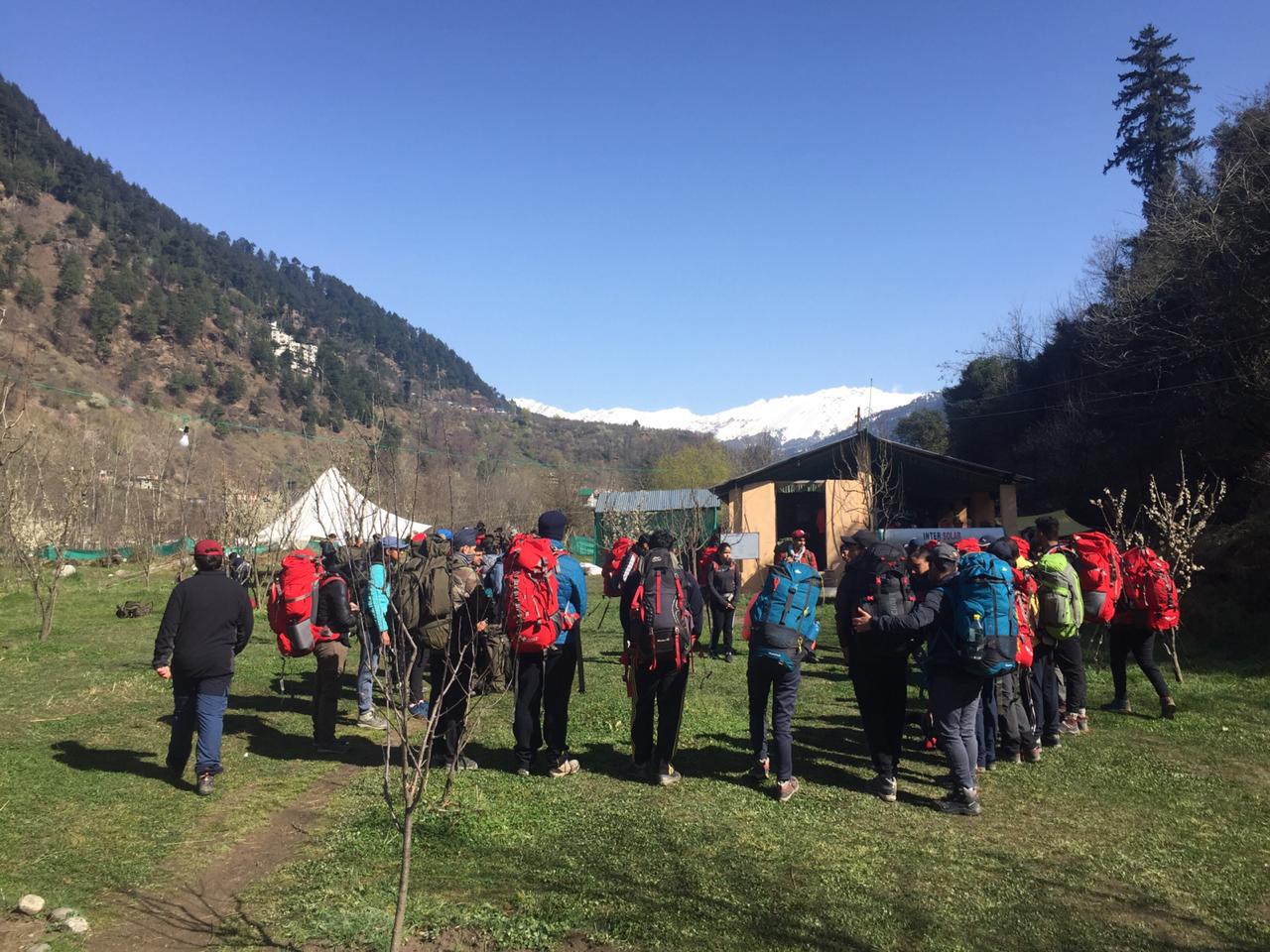
Why Riverside Is Worth Paying For in Manali
Start with the honest case for it, because there is one.
Manali town has grown fast and in places badly. The main bazaar in season is traffic, horns and hotel blocks. A riverside camp 10 or 15 minutes out of that is a different experience entirely: the noise is water instead of engines, the temperature drops several degrees near the river, and children have somewhere to be that isn’t a hotel corridor.
The sound is the part people underestimate. A Himalayan river at close range is loud, continuous and strangely restful, and it masks everything else. Guests who arrive worried about sleeping in a tent usually report the opposite problem.
So the appeal is real. The question is which camp.
Eight Things That Separate a Camp From a Tent on a Riverbank
1. Where the Tents Sit Relative to the River
This is the one that matters most and the one almost nobody asks about.
Himalayan rivers are not static. The Beas runs low and clear in May and becomes something else entirely during the monsoon, and its channel is wider than the water in it at any given moment. Himachal Pradesh saw severe flood damage along the Beas in July 2023, with structures built close to the river among the worst affected.
A camp pitched on the shingle inside the active channel has a view. It does not have a margin. Ask directly how high above the river the tents sit, and whether the site has ever been evacuated. An operator who knows their ground will answer immediately and in metres. An operator who changes the subject has told you what you needed to know.
2. The Sanitation
Washrooms are the single biggest gap between what camps advertise and what they have.
The good version is plumbed, attached or close by, with running water, hot water at predictable hours, and a drainage system that goes somewhere. The bad version is a pit behind a screen, within smelling distance of the tents, discharging towards the river you can hear from your bed.
Ask whether washrooms are attached or shared, how many there are for how many tents, whether hot water is available and when, and where the waste goes. The last question is the one that separates camps that have thought about it from camps that haven’t.
3. Whether the River Is Reachable or Just Visible
Riverside in a listing can mean the water is 20 m away across a lawn, or it can mean the water is visible from a ridge 200 m above and down a scree slope.
Both can be lovely. They are not the same holiday, and if you have children the difference is the entire point. Ask how long it takes to walk from the tents to the water’s edge and whether the bank is accessible or a drop.
4. Group Separation
A camp that takes a family of four and a corporate group of 40 on the same night, in the same clearing, with one dining area, has sold you a product it can’t deliver. You will be going to bed when they are starting.
Ask whether the camp takes multiple bookings at once, whether there are separate zones, and specifically whether a large group is booked on your dates. Camps that routinely host school and college programmes know how to keep them apart from couples and families, because they have to.
5. Who Is On Site Overnight
By which we mean a trained adult, awake or reachable, with a first aid kit, a working phone and a plan for getting someone to a hospital at two in the morning.
A surprising number of camps lock up and leave a caretaker. Ask who stays, what their training is, and what the evacuation route to the nearest hospital looks like. Manali has a civil hospital and the drive from Kalath is short, which is a point in favour of camps on that stretch.
6. Food
Camp food in the Kullu valley is either very good or very grim, and the dividing line is whether the camp has a real kitchen or a gas burner in a tent.
Ask whether meals are cooked on site, whether there’s a fixed menu or a choice, and how they handle vegetarian, Jain and allergy requirements. If you’re bringing children, ask what the fallback is when a nine year old refuses everything on the table, because a camp used to families will have one.
7. What Happens When It Rains
It will rain. Himachal gets a real monsoon and even outside it the weather in the Kullu valley turns in an hour.
The question is whether the camp has a covered common area big enough to hold everyone, or whether rain means being confined to your tent until it stops. This is the difference between a wet afternoon and a ruined trip, and it’s a straightforward thing to ask about.
8. Whether Activities Are Run In House or Outsourced
Plenty of camps advertise rafting, trekking and climbing, then hand you to a third party at the gate with no idea what their safety standards are.
Ask who runs the activities, what their qualifications are, and whose equipment you’ll be using. A camp that’s part of an operator running its own climbing, trekking and rafting programmes can answer that in one sentence. One that’s subcontracting will say “our partners”.

What “Luxury Camping” Actually Means
The word is attached to everything now, so it’s worth stripping down.
| Claim | What to verify |
|---|---|
| Luxury tents | Standing height, a proper bed and mattress rather than a mat, flooring, lighting, and a zip that works |
| Attached washroom | Plumbed and attached to your tent, not a shared block described as attached |
| Hot water | Available on demand, or at fixed hours, and from what source |
| Power | Whether there’s grid power, a generator, solar, or nothing after 10pm |
| Heating | Whether tents are heated in winter, and how. Open flame inside a tent is not a feature |
| Riverside | Distance to the water in metres, and the height of the tents above the channel |
Luxury that’s real means you sleep well, wash properly and stay warm. Everything else is decoration. Our riverside camping stay at Manali is a two night programme graded Standard, built around being by the river rather than running a sightseeing circuit, with a maximum group size of 30.
The Two Rivers
We run riverside camps on two different rivers in the Kullu region, and they suit different trips.
| Beas at Kalath, near Manali | Tirthan Valley | |
|---|---|---|
| Elevation | 1,980 m | 1,600 m |
| River | Beas | Tirthan |
| Capacity | 75 | 75 |
| From | ₹2,500 per night | ₹4,500 per night |
| Distance from Manali | Short drive | Around 3 hours |
| Character | Bigger river, closer to Manali and its activities | Quieter, apple orchards, almost no through traffic |
| Nearby | Manali, Solang, Hampta and Beas Kund trailheads | Great Himalayan National Park, a UNESCO World Heritage site |
| Best for | Families wanting Manali access, school and college groups, first time campers | Couples, people who want quiet, anglers, GHNP trekking |
If you want to be near Manali and its activities, Kalath. If the point of the trip is for nobody to be able to reach you, Tirthan. We also run a camp at Jibhi, in the same broader valley system as Tirthan.
Season
| Period | Conditions |
|---|---|
| March to May | Spring. Cool nights, blossom in the valley, rivers low and clear. Excellent |
| June | Hot in the plains, pleasant here, and the busiest stretch of the year |
| July to August | Monsoon. Green, dramatic, wet, and the rivers run high and brown. Check the camp’s position above the channel |
| September to October | The best of the year. Clear air, settled weather, warm days, cold nights, few people |
| November to February | Cold. Nights well below freezing. Winter camping is a real thing here but ask specifically about heating |
September and October are what we recommend and almost nobody books. The monsoon has cleared, the light is extraordinary, and you get the river to yourself.
Camping With Children
This is what most of our riverside enquiries are actually about, so here’s the practical version.
Children do better in tents than adults expect. The novelty carries them a long way. The thing that sinks a family camping trip isn’t the tent, it’s cold at night and nowhere to go when it rains.
Ask about the river access specifically. A camp where you can see the water but can’t get to it safely is frustrating with children. A camp with an accessible, shallow bank under supervision is the whole holiday.
Check the overnight staffing, not the daytime staffing. This is where the question in point five above earns its keep.
Bring one more warm layer than you think you need. Kalath at 1,980 m is cold at night even in June, and children feel it before adults do.
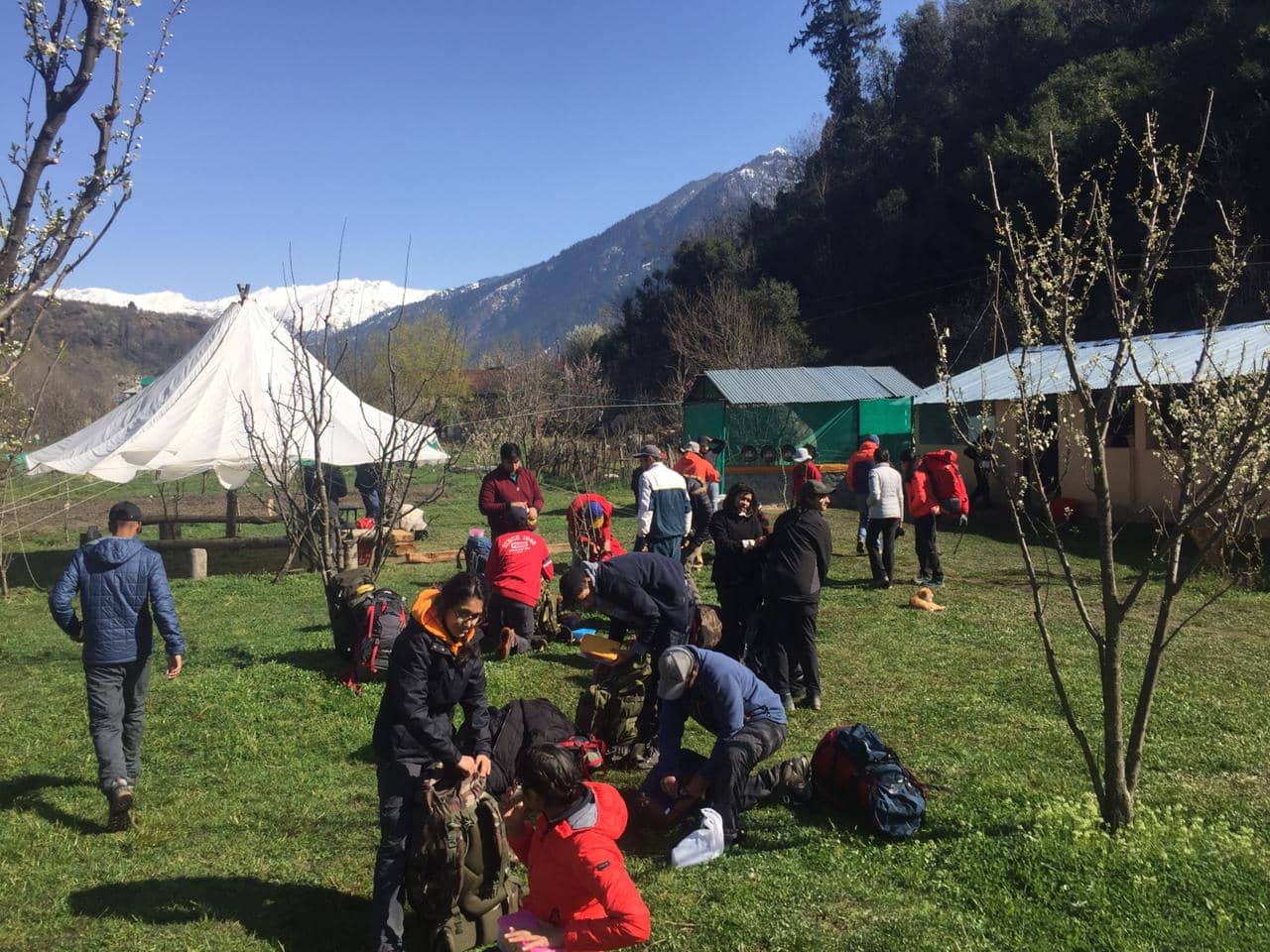
Our camps take families alongside school and college programmes, which means the infrastructure is built for children rather than tolerating them: covered common space, real kitchens, plumbed washrooms, and staff who are used to it.
School and College Groups
A large part of what our Manali camp does is school adventure programmes, college outdoor programmes and experiential learning trips, with a capacity of 75.
If you’re a teacher or programme coordinator, the questions you’ll be asked by parents are the eight above plus three more: the staff to student ratio, the certifications held by the people running activities, and the written evacuation plan. We’d rather you asked us those before booking than after.
We also run a longer adventure camping programme in Manali built specifically for groups, which structures activities across several days rather than leaving them to be arranged on the morning.
Booking a Riverside Camp in Manali
Into Wild Himalaya Expeditions has operated in the Kullu valley since 2004 and runs its own riverside camps rather than reselling someone else’s.
Into Wild Himalaya Camp Manali sits beside the Beas at Kalath at 1,980 m, from ₹2,500 per night, with a capacity of 75. See our camps for the Tirthan Valley and Jibhi sites, or Talk to our team about dates, group size and what you want the trip to be.
Because we also run the climbing, trekking and rafting programmes in this valley, activities from our camps are run by our own instructors with our own equipment. That’s the short answer to question eight.
Frequently Asked Questions
What Is Riverside Camping in Manali?
Staying in tents on a site beside one of the Kullu valley’s rivers, usually the Beas, rather than in a hotel in Manali town. A proper camp has raised ground clear of the river channel, plumbed washrooms, a covered common area and trained staff on site overnight.
Is Riverside Camping in Manali Safe?
It depends entirely on the camp. The critical factor is how far above the active river channel the tents sit, because Himalayan rivers rise fast and Himachal saw serious flood damage along the Beas in July 2023. Ask for the height above the channel in metres, and ask who stays on site overnight.
How Much Does Riverside Camping in Manali Cost?
Our Beas river camp at Kalath starts at ₹2,500 per night. Our Tirthan Valley camp starts at ₹4,500 per night. Our two night riverside camping stay at Manali is priced as a package rather than per night. Budget tent operators in Manali charge considerably less, usually by leaving out sanitation, staffing or both.
What Is the Best Time for Riverside Camping in Manali?
September and October. The monsoon has cleared, days are warm, nights are cold, visibility is at its best and the camps are quiet. March to May is also excellent. July and August are green and dramatic but wet, with rivers running high.
Is Riverside Camping in Manali Suitable for Families With Children?
Yes, and it’s what most of our riverside bookings are. The things to check are safe accessible river bank, a covered common area for rain, heating or enough bedding for cold nights, and a kitchen that can handle a child who won’t eat the menu.
Where Is the Into Wild Himalaya Riverside Camp in Manali?
Beside the Beas river at Kalath, in the Kullu valley, at an elevation of 1,980 m. It’s a short drive from Manali, which keeps the town’s activities and its hospital within easy reach while leaving the traffic and noise behind.
Do Riverside Camps in Manali Have Attached Washrooms?
Some do and many don’t, and the listings often blur the distinction between attached and shared. Ask whether the washroom is plumbed and attached to your own tent, how many washrooms serve how many tents, whether hot water is available, and where the waste discharges.
Can You Camp Beside the River in Manali in Winter?
Yes, but ask specifically about heating. Nights at 1,980 m go well below freezing from November to February. A camp that runs in winter should be able to tell you how tents are heated and what the bedding provision is, and open flame inside a tent is not an acceptable answer.
What Activities Are Available From a Riverside Camp in Manali?
From our camps: trekking, rock climbing, rafting on the Beas, mountain biking, fishing and ice climbing in winter, run by our own instructors with our own equipment. Many camps advertise the same list and subcontract it, so ask who actually runs each activity and whose gear you’ll be using.
Can Riverside Camps in Manali Host School and College Groups?
Ours can, with a capacity of 75 at both the Manali and Tirthan Valley camps, and school and college programmes are a core part of what we do. For group bookings the questions worth asking any operator are the staff to student ratio, the certifications of the activity instructors, and whether there’s a written evacuation plan.


