
A mountain itinerary can be described as a trek, a trekking peak, a summit climb or a mountaineering expedition. To someone planning a Himalayan adventure, these labels can sound like a simple progression from easy to difficult. In reality, they are not a universal difficulty scale.
A “trekking peak” can involve glacier travel, crampons, rope systems, steep snow or ice and summit-day conditions that are significantly more demanding than the name suggests. Equally, a high-altitude mountaineering expedition does not automatically mean highly technical climbing: some objectives are technically straightforward but demanding because of altitude, remoteness, weather, duration and logistics.
This distinction matters when choosing a Himalayan objective. The right question is not simply, “What grade is this peak?” It is, “What will I actually need to be able to do, at what altitude, in what conditions, for how long, and with what level of mountain support?” This guide explains how experienced climbers and expedition operators should read mountain difficulty.
What Is a Trekking Peak?
The term “trekking peak” is widely used in Himalayan tourism, particularly for mountains that can be approached on foot through a trekking route and climbed using mountaineering techniques on the summit section. However, “trekking peak” is not a universal international difficulty grade.
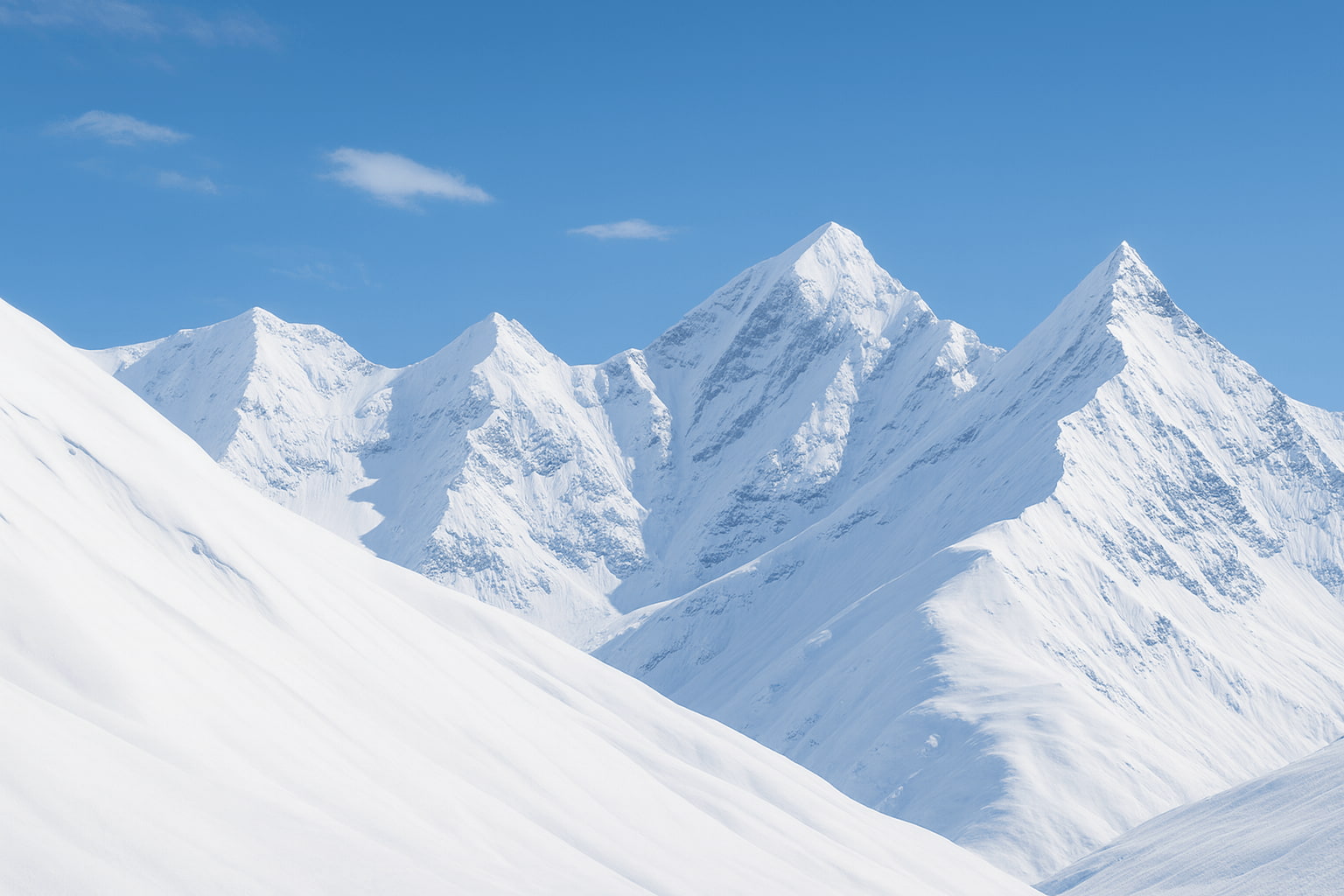
The term can describe a mountain that is relatively accessible compared with a major expedition objective, but it does not by itself tell you whether the summit involves glacier travel, fixed ropes, steep snow, ice climbing, rock climbing or significant altitude. That is why two trekking peaks can have completely different demands. A peak may have a straightforward approach and relatively simple summit route but still reach an altitude where acclimatisation becomes a major factor. Another may be lower but require substantially more technical climbing.
The UIAA also distinguishes between mountain activities such as trekking, mountain walking and mountaineering. Its qualification framework describes mountaineering as an advanced discipline involving mixed terrain and skills beyond ordinary mountain walking. In other words, the transition from trekking to mountaineering is often defined by the skills and terrain involved rather than by the name of the mountain.
What Is a Mountaineering Expedition?
A mountaineering expedition is better understood as an operational and technical undertaking than simply a difficult trek. An expedition may involve:
- High-altitude acclimatisation
- Glacier travel
- Snow and ice climbing
- Rock or mixed climbing
- Rope systems
- Fixed lines
- Crevasse management
- Technical equipment
- High-altitude camps
- Weather windows
- Route finding
- Emergency planning
- Longer periods away from road access and normal infrastructure
The precise combination varies from mountain to mountain. This is why expedition difficulty cannot be reduced to altitude alone. A 6,000-metre objective with straightforward terrain may demand a very different skill set from a lower mountain involving steep technical climbing.
UIAA guidance on evaluating mountain routes emphasises the importance of considering overall route difficulty, participants’ competence and conditioning, acclimatisation, equipment and objective hazards such as rockfall, avalanche and weather.
Why Mountain Grades Can Be Confusing
One of the biggest mistakes in reading mountain descriptions is assuming that every number or grade measures the same thing. It does not. Climbing and mountaineering use several grading systems, and different systems describe different aspects of difficulty.
For example, a technical rock grade may describe the difficulty of a particular climbing passage. A French or UIAA rock grade is not a complete assessment of an entire Himalayan expedition. Similarly, a route may be described as PD, AD, D or another alpine grade. These global or alpine classifications attempt to communicate the overall seriousness or technical character of an itinerary, but they still need to be read alongside route length, altitude, terrain, exposure, conditions and objective hazards.
The UIAA notes that multiple climbing difficulty systems exist and that confusion between grading systems can create problems when climbers compare routes. The practical lesson is simple: a grade is information, not the whole mountain.
The Five Things You Should Look At Before Choosing a Peak
When we assess a Himalayan climbing objective, the mountain’s headline grade is only one part of the picture.
1. Technical difficulty
Technical difficulty asks what climbing skills are required. Depending on the route, this may include:
- Scrambling
- Rock climbing
- Snow climbing
- Ice climbing
- Mixed climbing
- Roped movement
- Abseiling or rappelling
- Fixed-rope ascent
- Crampon and ice-axe techniques
For rock climbing, the UIAA uses a technical scale in which Grade I represents easy scrambling and progressively higher grades represent increasingly demanding climbing. But a rock grade describes the technical passage; it does not automatically describe the full mountain route. A peak with modest rock climbing but severe altitude may therefore be harder overall for an inexperienced high-altitude climber than a technically harder route at low altitude.
2. Altitude
Altitude changes the physical equation. As elevation increases, the available oxygen decreases and the body’s ability to sustain effort changes. Walking, carrying equipment, recovering overnight and making decisions all become more demanding. This is why a route that looks technically simple on paper can become a serious high-altitude objective.
UIAA medical guidance distinguishes ordinary trekking from mountaineering partly through increasing altitude and physical demands. It also emphasises the importance of ascent profiles and acclimatisation when evaluating organised high-altitude trips. Altitude should therefore be considered separately from technical grade.
3. Exposure and consequence
Exposure describes how serious the consequences of a mistake can become. A relatively easy section of scrambling may feel very different when it is steep, exposed, covered in snow, above a glacier, on a narrow ridge, or far from immediate assistance. This is one reason two routes with similar technical grades can feel completely different in practice.

4. Route condition
Mountain routes are not static. Snow conditions, ice, rockfall, avalanche risk, glacier movement, temperature and recent weather can alter the character of a route. A climb described as straightforward in one season can become considerably more complex under different conditions. UIAA route-planning guidance specifically highlights the need to assess the condition of the mountain and objective hazards rather than relying only on a nominal route grade.
5. Expedition logistics
This is the factor that is often missing from commercial descriptions. A mountain can be technically moderate but operationally demanding because of remote access, a long approach, multiple camps, limited communications, difficult evacuation, unstable weather, restricted summit windows, heavy equipment requirements or the need for specialist guides and mountain staff. The longer and more remote an objective becomes, the more important logistics and contingency planning become.
Trekking Peak vs Mountaineering Expedition
The easiest way to understand the difference is to compare the type of commitment involved.
| Factor | Trekking peak | Mountaineering expedition |
|---|---|---|
| Approach | Usually an established trekking approach | Often longer, remote or expedition-style |
| Terrain | Trekking plus summit terrain | Alpine, glaciated, mixed, snow/ice or technical terrain depending on route |
| Technical skills | May be limited, or may require basic mountaineering skills | Often requires established mountaineering skills |
| Altitude | Can be very high | Frequently high or extreme |
| Equipment | Depends strongly on the peak | Usually more specialised |
| Rope work | May be limited or guided | Often integral to the route |
| Camps | Often simpler | May involve high camps and more complex logistics |
| Weather impact | Important | Can determine summit windows and expedition strategy |
| Rescue complexity | Depends on location | Often significantly greater in remote terrain |
| Preparation | Trekking fitness plus peak-specific skills | Mountain fitness, acclimatisation and technical or expedition preparation |
This table is a framework, not a universal classification. Some trekking peaks require serious mountaineering skills, while some expedition peaks have relatively simple technical terrain.
Does a Higher Peak Always Mean a Harder Peak?
No. Altitude is one dimension of difficulty, not the entire equation. Consider two hypothetical Himalayan objectives. Peak A reaches 6,200 metres on a relatively straightforward snow route with a long acclimatisation programme. Peak B reaches 5,500 metres but involves steep mixed climbing, exposed rock, complex route finding and difficult descent conditions.
Which is harder? There is no useful answer without knowing the route, conditions, climber experience, weather and operational plan. This is why experienced mountaineers avoid treating altitude as a simple difficulty ranking.
What Do Grades Such as F, PD, AD, D and TD Mean?
Alpine routes are sometimes described using the French adjectival system:
- F — Facile, generally easy
- PD — Peu Difficile, somewhat difficult
- AD — Assez Difficile, fairly difficult
- D — Difficile, difficult
- TD — Très Difficile, very difficult
- ED — Extremement Difficile, extremely difficult
These grades are intended to communicate the overall character of an alpine route, but they are not interchangeable with a rock-climbing grade. The UIAA’s documentation explains the historical development of these systems and notes that the F–PD–AD–D–TD–ED scale is a global assessment system, while separate systems exist for specific technical climbing difficulties. Subgrades and additional descriptors may also be used in climbing literature.
For someone planning a Himalayan expedition, the important point is not to memorise every grade. It is to understand what the grade is actually measuring.
What Does “Easy” Mean at High Altitude?
This is where commercial descriptions can become misleading. “Easy climbing” does not necessarily mean easy for a trekker. An easy alpine route can still involve:
- Crampons
- Ice axe
- Glacier travel
- Roped movement
- Steep snow
- Exposure
- Early summit starts
- Long summit days
- High-altitude camps
UIAA medical guidance gives examples of how increasing altitude and route demands change the physical requirements of mountain activities. It also stresses that technically simple high-altitude journeys can still carry significant altitude-related risks. For this reason, a responsible operator should explain the actual demands rather than relying on an attractive label such as “easy peak”.
When Does Trekking Become Mountaineering?
There is no single altitude or distance at which trekking suddenly becomes mountaineering. The transition is usually marked by the terrain and skills required. If a route requires participants to move safely on steep snow or ice, use crampons and ice axes, travel on glaciers, climb technically, manage ropes or deal with significant alpine exposure, it has moved beyond ordinary trekking.
The UIAA’s Mountain Qualification Labels make a similar distinction: mountain walking and trekking may include steep terrain, scrambling and small snow or ice sections, while mountaineering covers more advanced alpine routes requiring mixed-terrain skills. This distinction is particularly important for people moving from Himalayan trekking into their first climbing objective.
How Should You Prepare for a Trekking Peak?
Preparation should be based on the actual objective. A strong trekker is not automatically a competent mountaineer. Before attempting a trekking peak, consider developing:
- Aerobic endurance
- Strength for long mountain days
- Experience walking at altitude
- Crampon skills if required
- Ice-axe skills if required
- Basic rope awareness
- Movement on snow and mixed terrain
- Navigation and mountain awareness
- Knowledge of altitude symptoms
- Familiarity with the equipment required for the route
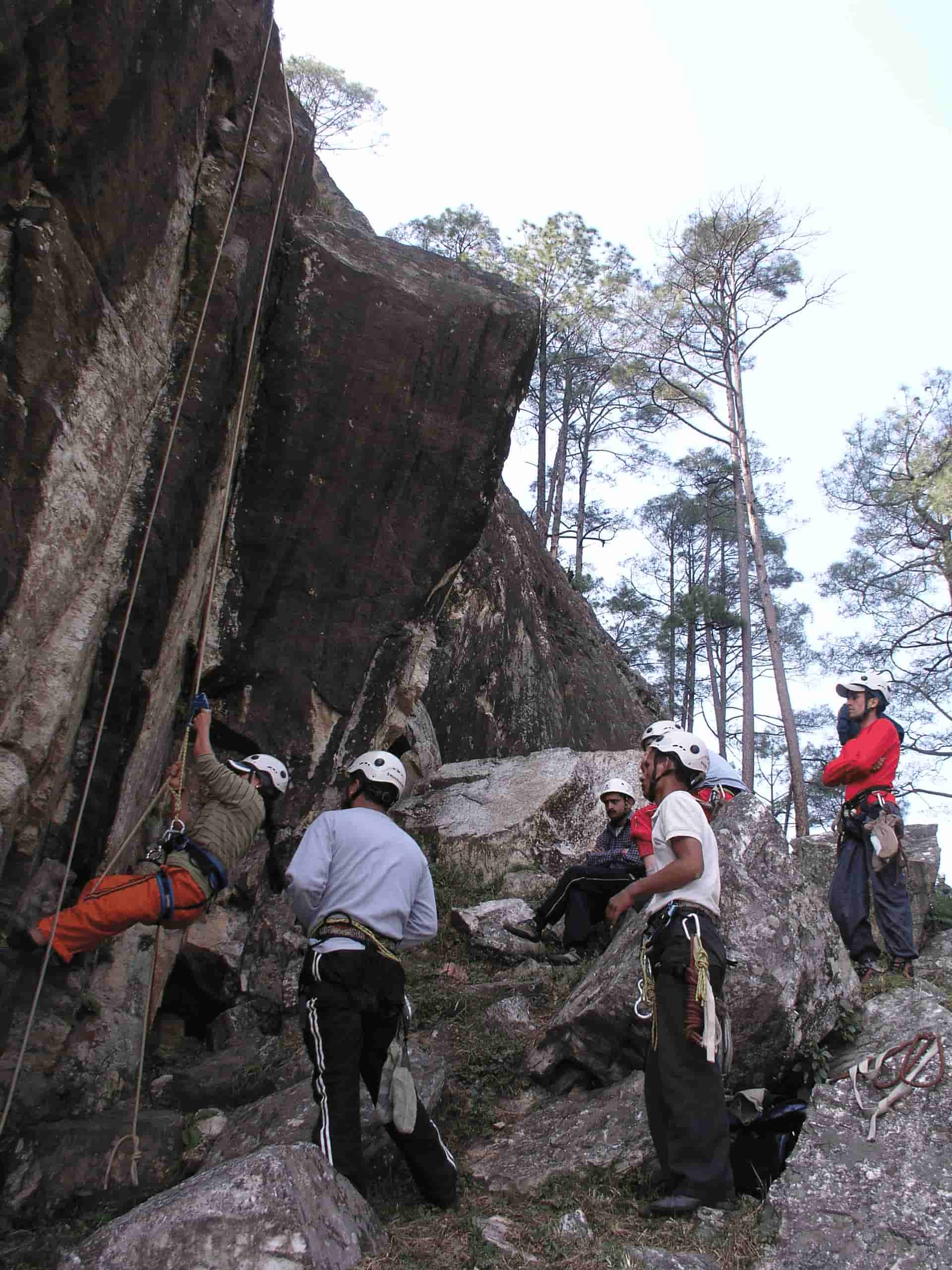
A progressive approach is usually more useful than jumping directly from trekking into a technically demanding expedition. A climber based in or visiting the Himalayas can use lower-risk rock, snow and ice training environments to develop movement skills before taking those skills onto a higher and more remote objective — for example through a basic mountaineering course in Manali, a day of rock climbing at Sethan or day ice climbing.
How Do You Know If You Are Ready for a Mountaineering Expedition?
Read the itinerary beyond the summit name. Look for:
- Required previous experience
- Maximum altitude
- Daily elevation gain
- Summit-day duration
- Technical climbing grades
- Snow and ice requirements
- Glacier travel
- Rope systems
- Number of camps
- Weather contingency days
- Evacuation arrangements
- Guide-to-client ratio
- Equipment requirements
- Medical and emergency planning
A reputable operator should be able to explain these points clearly. UIAA guidance for organised treks and expeditions specifically recommends looking for a truthful itinerary, ascent profile, expected daily walking time, technical difficulty, physical demands and information about how the operator manages weather, health and travel delays.
How We Approach Himalayan Mountaineering
At Into Wild Himalaya Expeditions, we treat mountain difficulty as a combination of terrain, altitude, conditions, technical requirements and logistics rather than simply assigning a label to a peak. Our experience operating in the Himalayas means route planning starts with the mountain itself: its approach, season, access, terrain, weather patterns, altitude profile and operational requirements.
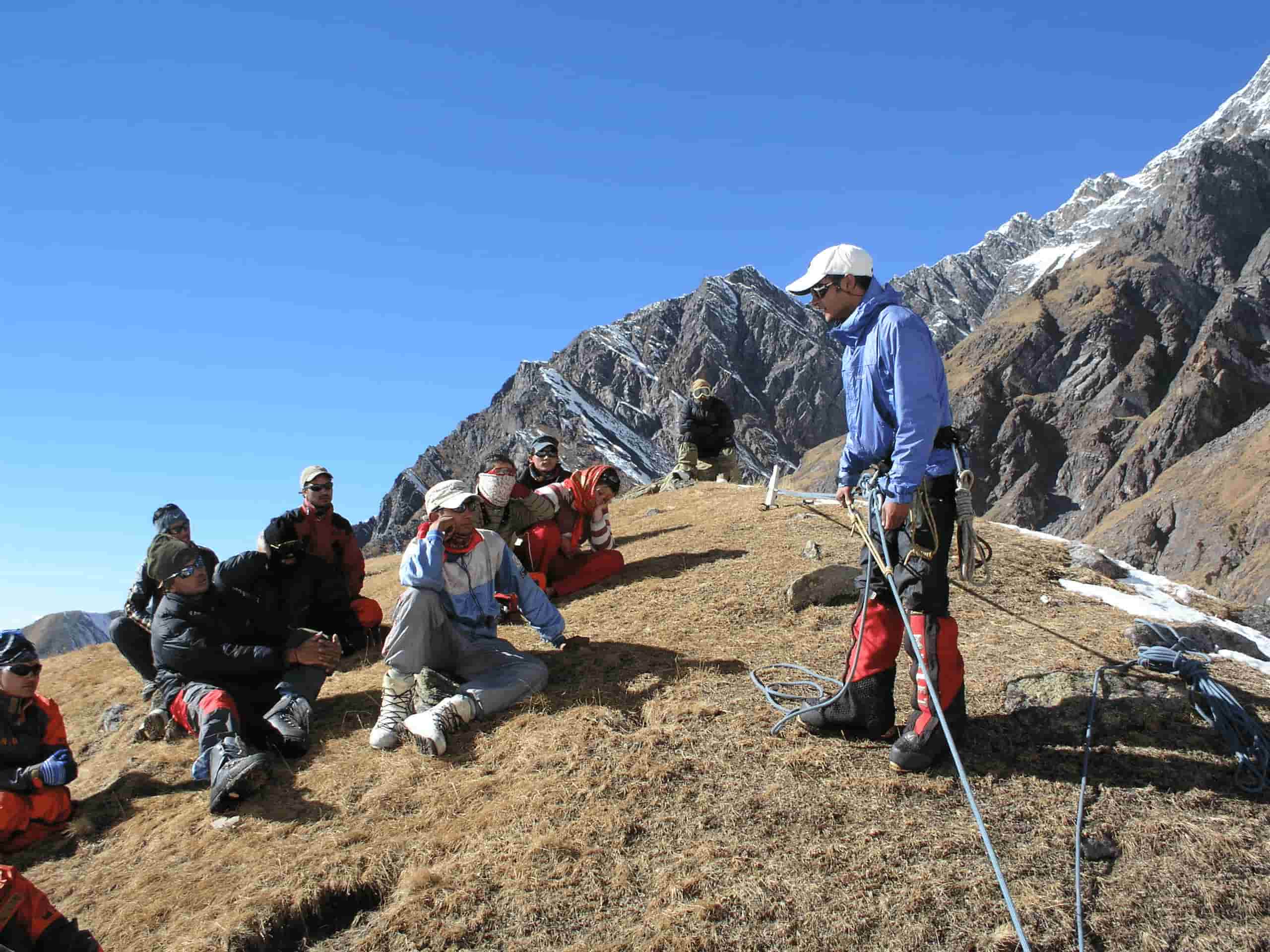
For climbers developing their skills, Manali and the surrounding Himalayan terrain provide a practical environment for training in rock climbing, ice climbing, snow skills and other mountain disciplines. For more experienced participants, the objective can then progress towards higher-altitude and expedition-style environments such as Kanamo Peak or Island Peak, where route planning, acclimatisation and mountain logistics become increasingly important.
This progression matters because technical ability and high-altitude experience are not the same thing. A climber may be comfortable on rock at low altitude but have limited experience operating on a high Himalayan mountain. Conversely, an experienced trekker may have excellent endurance but need technical training before safely participating in an alpine climbing route. The objective should therefore be matched to the individual’s existing skills and the specific demands of the mountain.
From Trekking to Mountaineering: A Practical Progression
For someone beginning the transition into mountaineering, a sensible pathway may look like: trekking → high-altitude trekking → mountain skills training → snow, ice or rock skills → introductory mountaineering → more technical Himalayan objectives.
The exact progression depends on the person. There is no requirement to follow one fixed ladder, and experience gained in one mountain environment does not automatically transfer to every other environment. What matters is building the specific competence required by the next objective. Our guide to rock climbing and bouldering in the Indian Himalayas covers the training environments available around Manali.
The Most Important Question to Ask an Operator
Instead of asking only “What grade is this peak?”, ask: “What will I actually have to do on summit day?” A useful answer should tell you:
- How many hours you may be climbing
- What terrain you will encounter
- Whether crampons and ice axes are required
- Whether ropes are used
- Whether glacier travel is involved
- How much altitude you will gain
- What the descent involves
- What happens if weather closes the route
- What level of previous experience is expected
That information is much more useful for decision-making than a single difficulty label.
Final Thought: Read the Mountain, Not Just the Grade
Mountain grades are useful because they provide a common language. But they are only one part of the information needed to understand an objective. The real difficulty of a Himalayan mountain comes from the combination of technical terrain, altitude, exposure, weather, route condition, remoteness, duration and the climber’s own experience.
That is why the best expedition planning starts with a detailed understanding of the mountain rather than a single grade. For anyone moving from trekking towards mountaineering, the most valuable progression is not simply to choose a higher peak. It is to develop the skills, judgement and experience required for the terrain you intend to enter.
At Into Wild Himalaya Expeditions, our approach is to match the mountain objective with the participant’s experience, preparation and the realities of the Himalayan environment. That is what turns a mountain itinerary into a properly planned expedition.
See our Himalayan mountaineering expeditions, or talk to our team about which objective matches your experience.
Frequently Asked Questions
Not necessarily. “Trekking peak” is a category or tourism term rather than a universal difficulty grade. Some trekking peaks require substantial mountaineering skills.
A trekking peak often combines an established trekking approach with a summit climb. A mountaineering expedition generally involves a higher level of technical, logistical or environmental commitment, although the exact demands vary significantly by objective.
Some are, some are not. Depending on the mountain, they can involve snow, ice, rock, glacier travel, crampons, ice axes and rope systems.
Neither should be considered in isolation. Altitude, technical difficulty, exposure, route condition, weather and logistics interact to determine the real demands of a mountain.
PD means “Peu Difficile” and is part of the alpine adjectival grading system. It indicates a relatively low level of overall alpine difficulty, but the actual route should still be assessed for altitude, exposure, terrain and current conditions.
Fitness is important but is not the same as technical competence. If the peak involves snow, ice, glacier travel or rope work, appropriate training and experience are also required.
Depending on the objective, useful skills can include crampon and ice-axe techniques, snow movement, rope systems, glacier travel, navigation, mountain weather awareness and altitude management.


