
Ice climbing in India happens mainly in Spiti, Lahaul and the Nubra valley of Ladakh, where waterfalls freeze from around November to March. Routes are graded on an Indian scale, HWI, which factors altitude alongside technical difficulty. Beginners usually start with a guided day near Manali, from ₹15,000.
Indian ice climbing barely existed as a discipline before about 2015. There was mountaineering, and there was ice encountered as an obstacle on the way to a summit, but climbing frozen waterfalls as the objective in itself is recent here, and the people who developed it are mostly still climbing.
That makes it one of the few genuinely frontier activities left in the Indian Himalayas. There are valleys with large quantities of climbable ice that nobody has touched, which is not something you can say about rock in Europe or ice in Canada.
It also means the information is scattered across expedition reports and a handful of magazine articles. This is an attempt to put it in one place.
A Short History, Because It Explains the Map
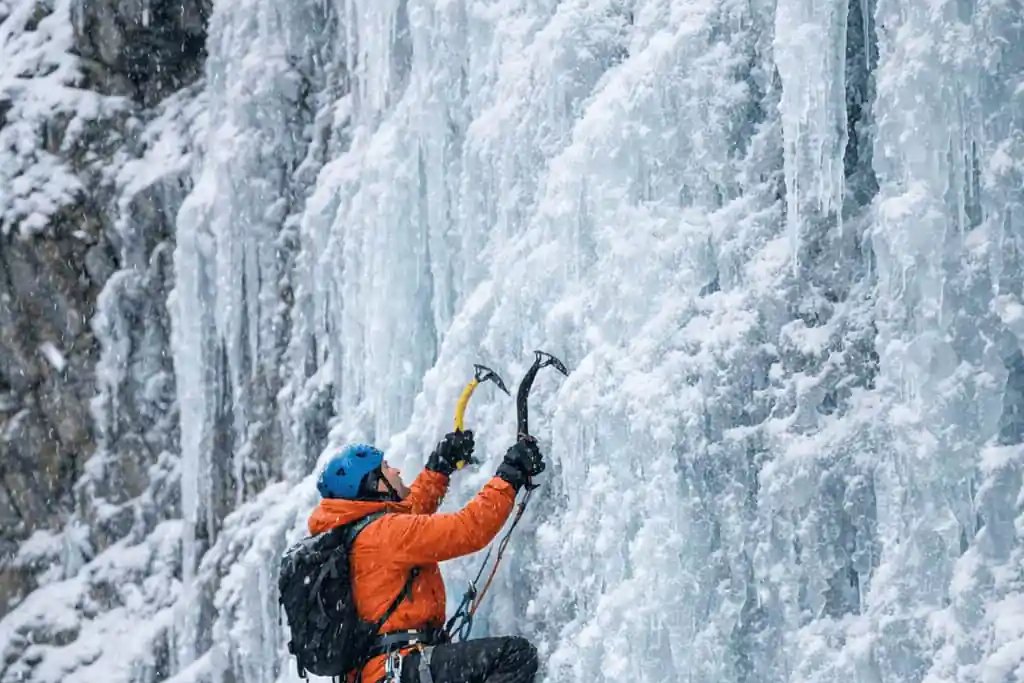
In January 2015 three climbers, Prerna Dangi, Karn Kowshik and Bharat Bhushan, went to the Shillah nala in Spiti on what was essentially a reconnaissance for Indian ice. That trip is a reasonable date to start from.
Dangi climbed the Dhankar fall in January 2018 and has since repeated it. In 2019, Spiti hosted the first Piti Dharr International Ice Climbing Festival, running 5 to 15 January out of Kaza, supported by the Indian Mountaineering Foundation and local partners including the Kaza monastery. At least ten routes of serious quality went up during that period. The American climbers Ari Novak and Karsten Delap recorded nine first ascents between late December and mid January, and Bhushan’s team put up five new lines in four days near Kaza.
In January 2020, Kowshik with Tsewang Namgyal and Rigzin Tsewang opened around twenty new routes in Ladakh. The first Nubra Ice Climbing Festival followed in February 2021, run by a team of three with about thirty participants sharing the organisers’ personal equipment, in temperatures around minus 25°C.
A documentary called The Fall, released in 2016, followed Abhijeet Singh and Pranav Rawat climbing frozen waterfalls in Spiti and was credited in the Indian press with documenting the country’s first frozen waterfall ascent.
Three things follow from that history. The ice is concentrated where those people went. The development is thin, so route information is patchy. And the community is small enough that guided instruction, rather than guidebooks, is how most people get in.
Where the Ice Actually Is
| Region | Character | Access in winter |
|---|---|---|
| Spiti | The highest and best quality ice in India. Streams freeze almost completely, the exception being the Spiti river itself | Road from Shimla via Kinnaur, open year round. Manali road closed |
| Lahaul | Rated immediately behind Spiti. Shorter approaches, slightly warmer, some water still running behind the ice | Via the Atal Tunnel, which made winter access practical from 2020 |
| Nubra, Ladakh | High, cold, very lightly developed. Around twenty routes opened in January 2020 | Flight to Leh then road, with an Inner Line Permit |
| Solang valley | Close to Manali, used for instruction and shorter routes | Short drive from Manali |
| Other | Pahalgam in Kashmir and parts of Sikkim around Gangtok have reported ice | Varies |
Spiti
Spiti is the centre of Indian ice climbing and the reason is altitude combined with a cold desert climate. The valley sits mostly between 3,500 m and 4,500 m, it gets very cold, and it is dry, which means the streams freeze hard rather than staying slushy.
The named climbing areas include the Lingti nala, where a main crag was bolted and made safer during the 2019 festival, the Shillah nala, Dhankar, and areas near the villages of Pho and Morang. Kaza is the practical base.
Lahaul
Lahaul changed completely when the Atal Tunnel opened, because before that the valley was cut off for months. Winter access from 2020 onwards turned it into the most practical ice climbing destination in the country.
Routes here have been recorded from HWI 3 to HWI 6, which is a usefully broad range: there is beginner ground and there is hard ground in the same valley. Approaches are shorter than in Spiti and it’s marginally warmer, which has one downside. Some falls still have water running behind the ice, which changes how the ice behaves and how it must be protected.
Keylong is the base. The Sabertooth Wall near Keylong was climbed in 2021 by Anil Belwal, Mukesh Pawan, Sunil Bodh and Prerna Dangi.
Nubra and Ladakh
The highest and coldest, and the least developed. Around twenty routes went up in a single January. The Nubra festival has been the main vehicle for development.
Nubra needs an Inner Line Permit, arranged in Leh, and the logistics are harder than Himachal. For anyone interested in first ascents rather than repeats, it’s the obvious place to look.
HWI: India Has Its Own Grading Scale
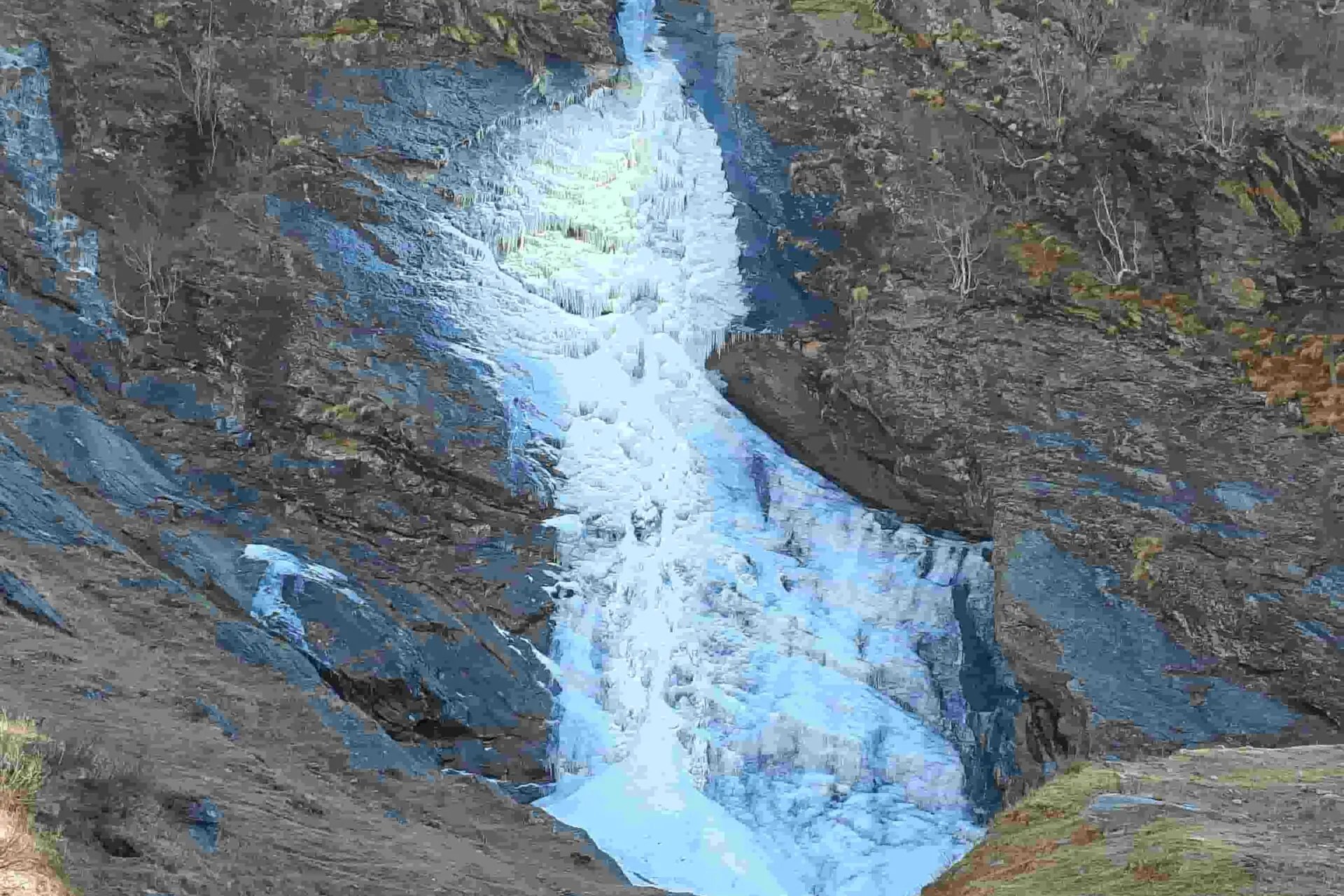
If you’ve ice climbed abroad you’ll know WI, water ice, running roughly WI 1 to WI 7. India uses HWI, Himalayan Water Ice, and the difference is not cosmetic.
HWI factors altitude into the grade alongside technical difficulty. The reasoning is straightforward. A pitch of vertical ice at 2,000 m in the Alps and the same angle of ice at 4,200 m in Spiti are not the same climb, because at 4,200 m you have roughly 60 percent of the oxygen and recovery between moves barely happens. Grading them identically would mislead people.
So an HWI grade is a statement about the whole experience of the route, not just the steepness of the ice. Treat an HWI number as harder than the same number in WI, and expect to climb a grade or more below your European or North American level on your first Indian season.
The Named Routes
Documented Indian ice is still a short list. These are among the established lines.
| Route | Grade | Length | Where |
|---|---|---|---|
| Snow Leopard | HWI 7 | 150 m | Near Morang, Spiti. Top above 4,267 m |
| Frozen Diesel | HWI 6+ | About 370 m, four pitches, finishing on a 40 m freestanding pillar | Near Pho, Spiti |
| Dhankar fall | HWI 6+ | About 180 m, three pitches, at roughly 4,000 m | Dhankar, Spiti |
| Cowboys in the Mist | HWI 5 | About 150 m | Spiti |
| Stairway to Something | HWI 4 | 380 m | Spiti |
| Sabertooth Wall | Recorded in the Lahaul range | Not published | Near Keylong, Lahaul |
Frozen Diesel is the one people talk about. Nearly 400 m of continuous ice in four pitches, topping out on a freestanding pillar forty metres high, which is a feature that exists for a few weeks a year and then collapses.
Note what the list implies. There is almost nothing published below HWI 4. That isn’t because easy ice doesn’t exist in India. It’s because easy ice doesn’t get written up, and most of what beginners climb here is unnamed ground found by instructors who know where it forms.
The Season
Waterfalls in the Indian Himalayas freeze from roughly November through March.
| Period | Conditions |
|---|---|
| November | Ice beginning to form. Thin, unreliable, not generally climbable |
| December | Forming properly. Early season ice, often hollow or detached in places |
| January | The core of the season. Hardest ice, coldest temperatures, shortest days |
| February | Still excellent, slightly more daylight. Peak conditions on many routes |
| March | Ice degrading, sun working on it, afternoon conditions deteriorating fast |
| April to October | No ice |
Two things about the shape of that season. Early and late ice behaves differently and is less trustworthy. And shaded, north facing lines hold condition far longer than anything the sun reaches, which is why the best routes are often in gloomy gullies rather than scenic open faces.
Our guided ice climbing days near Manali run from early December through January, which matches that window.
What It Takes: Skills
Ice climbing is not rock climbing with different shoes. The skills transfer less than people expect.
Movement on two tools and two crampons. The fundamental technique is placing the axes and standing on your feet, in a triangle, moving one point at a time. Beginners overgrip, hang off their arms and exhaust themselves in ten metres. The whole art is learning to trust your feet on two front points of steel.
Reading the ice. Which ice will hold a tool and which will fracture. Hollow ice sounds different. Ice with water behind it behaves differently. Recognising a detached curtain from below is a skill with real consequences.
Placing ice screws. Protection in ice is placed by the climber, into the medium, with no fixed gear. Screw placement, angle, and recognising ice that won’t take one are core.
Building anchors. V threads, screw anchors, and knowing which to use.
Belaying in winter conditions. With gloves, in cold, with rope that may freeze stiff.
Winter mountain judgement. Avalanche awareness on the approach, the effect of warming through the day, and knowing when to walk away. This is the skill that keeps people alive and the one that takes longest.
You don’t need prior rock climbing experience to try ice. For a guided taster day, you need no experience at all.
What It Takes: Kit
Mostly provided on a guided day or course, but worth understanding.
| Item | Notes |
|---|---|
| Technical ice axes | A pair, curved and aggressive, not a mountaineering walking axe |
| Rigid crampons | Vertical front points, fitted to a stiff boot |
| Stiff winter boots | B2 or B3, rigid enough that the crampon doesn’t flex off |
| Harness, helmet, belay device | Standard, with the helmet mandatory because ice falls |
| Ice screws | Placed by the leader. Not needed to start |
| Gloves | Several pairs. They get wet and wet gloves at minus 15°C are dangerous |
| Layering | Insulation you can shed on the climb and add back at the belay |
The belay is the cold part. Climbing generates heat and standing at an anchor paying out rope does not, which means the warm layer you need is the one you’re carrying rather than the one you’re wearing.
What It Takes: Cold
The Nubra festival in 2021 ran at around minus 25°C. Spiti in January is comparable. This is colder than most people have experienced outside a freezer.
The practical consequences: ropes stiffen, karabiner gates freeze, screw threads ice up, water bottles freeze solid, and bare skin on metal sticks to it. Everything takes longer and fine motor tasks become clumsy.
Lahaul is the gentler option, and it’s the reason our longer course is based there rather than in Spiti.
How to Actually Start
The sequence that works, in order.
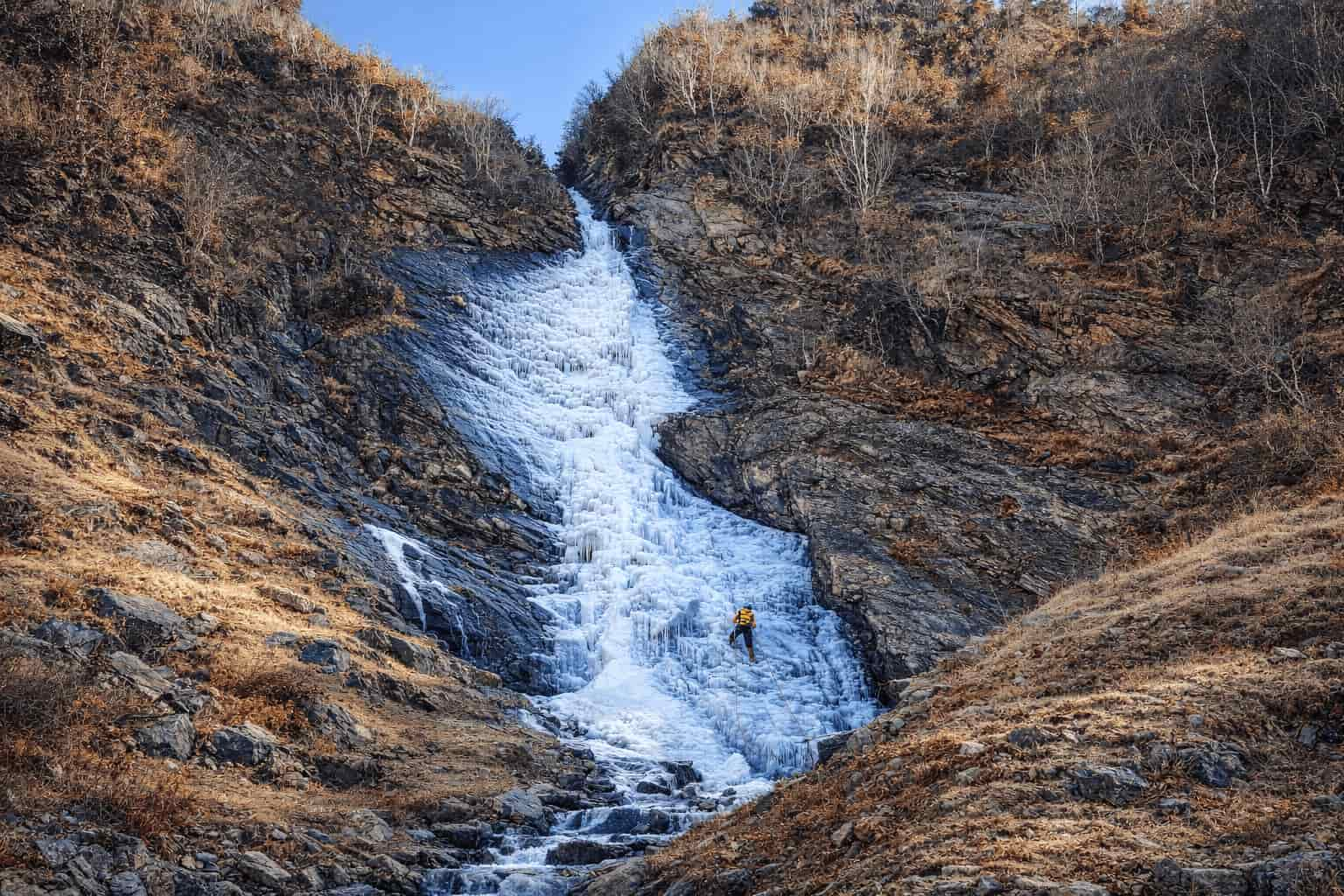
One. Take a guided day. Find out whether you like it before investing in kit or a week of your life. A single day on easy ice with an instructor and a tight ratio tells you everything. Our Day Ice Climbing in Manali runs one day with a maximum group size of 6 and a guide to client ratio of 1:2, at ₹15,000, with no prior experience needed and all equipment provided.
Two. Do a proper course. If the day works, a structured course is what converts interest into competence: technique, screws, anchors, rope systems, belaying and winter safety, taught in sequence on real ice rather than picked up piecemeal. Our 7 Day Ice Climbing Course runs in Manali and the Lahaul valley, graded Challenging, maximum group size 8, instructor to student ratio 1:5, at ₹78,000, and carries a basic ice climbing certification.
Three. Then climb with people better than you. There is no substitute and no shortcut. Indian ice is lightly developed, route information is thin, and the margin for a bad decision is smaller than on rock because the medium changes through the day.
What not to do is buy a pair of axes off a marketplace listing, watch some video, and drive to Spiti in January. The ice there is serious, the approaches carry avalanche risk, and there is no rescue infrastructure.
Where Manali Fits
Manali is where most people in India actually learn to ice climb, for three reasons.
It has short approaches to natural ice and shaded winter gullies in the surrounding valleys, which means a genuine first climb is possible within a day of arriving. It’s the gateway to Lahaul through the Atal Tunnel, so the step from learning to real routes is one tunnel long. And it has the year round climbing community and infrastructure, which Spiti and Nubra don’t.
That’s the practical argument for starting here rather than travelling to the best ice in the country first. The best ice is not where you want to find out whether you can stand on front points.
Manali also has rock climbing and mountaineering programmes running through the rest of the year, and most people who get into ice end up doing all three.
Booking
Into Wild Himalaya Expeditions has operated out of Manali since 2004.
| Day Ice Climbing | 7 Day Ice Climbing Course | |
|---|---|---|
| Duration | 1 day | 7 days |
| Location | Manali, Kullu valley | Manali and Lahaul valley |
| Difficulty | Moderate | Challenging |
| Maximum group | 6 | 8 |
| Ratio | 1:2 guide to client | 1:5 instructor to student |
| Experience needed | None | None, suits beginners and intermediates |
| Certification | No | Basic ice climbing certification |
| Price | ₹15,000 | ₹78,000 |
| Season | Early December to end of January | Winter season |
Ice climbing with us covers both. Talk to our team about which to book, and read our guide to choosing an expedition operator first if you’re comparing us against anyone else, because the questions in it are the ones that matter in winter.
Frequently Asked Questions
Where Can You Ice Climb in India?
Mainly Spiti, Lahaul and the Nubra valley of Ladakh. Spiti has the highest and best quality ice, Lahaul is close behind with shorter approaches and easier winter access through the Atal Tunnel, and Nubra is the highest and least developed. Solang valley near Manali is used for instruction, and ice has been reported in Pahalgam and around Gangtok.
What Is the Ice Climbing Season in India?
Roughly November to March, with January and February the core of it. November ice is thin and unreliable, December is early season, and by March the sun degrades routes quickly through the day. North facing and shaded lines hold condition much longer than open faces.
What Is HWI Grading?
Himalayan Water Ice, the Indian ice climbing grade. Unlike the international WI scale it factors altitude in alongside technical difficulty, because vertical ice at 4,200 m is a different proposition from the same angle at 2,000 m. Expect an HWI grade to feel harder than the same number in WI.
Can Beginners Ice Climb in India?
Yes. A guided day with a tight ratio and equipment provided needs no previous experience, including no rock climbing background. Our day near Manali runs at a 1:2 guide to client ratio with a maximum group of 6. What beginners should not do is travel independently to Spiti in January.
What Are the Hardest Ice Routes in India?
Snow Leopard near Morang in Spiti is graded HWI 7 over 150 m, with its top above 4,267 m. Frozen Diesel near Pho goes at HWI 6+ for about 370 m in four pitches, finishing on a 40 m freestanding pillar. The Dhankar fall is HWI 6+ over roughly 180 m at around 4,000 m.
How Cold Is Ice Climbing in India?
Very. The 2021 Nubra ice festival ran at around minus 25°C and Spiti in January is comparable. Ropes stiffen, karabiner gates freeze, screws ice up and fine motor tasks get clumsy. Lahaul is the more forgiving option, which is why structured courses tend to be based there.
Do You Need Rock Climbing Experience to Ice Climb?
No. The techniques transfer less than people assume, since ice climbing is built around placing two tools and standing on crampon front points rather than using your hands on holds. A complete beginner can have a good first day on ice. Rock experience helps with rope systems rather than with movement.
What Equipment Do You Need for Ice Climbing?
Technical ice axes, rigid crampons, stiff B2 or B3 winter boots, harness, helmet, belay device, several pairs of gloves and a layering system including a heavy belay jacket. Ice screws are the leader’s concern. On a guided day or course the technical equipment is provided.
How Much Does Ice Climbing in India Cost?
Our guided day near Manali is ₹15,000 including equipment and instruction at a 1:2 ratio. Our 7 day course in Manali and the Lahaul valley is ₹78,000, with a 1:5 instructor to student ratio and a basic ice climbing certification on completion.
Is There an Ice Climbing Festival in India?
Two. The Piti Dharr International Ice Climbing Festival began in Spiti in 2019, running out of Kaza with support from the Indian Mountaineering Foundation, and at least ten quality routes were established around its first edition. The Nubra Ice Climbing Festival in Ladakh followed in February 2021.


